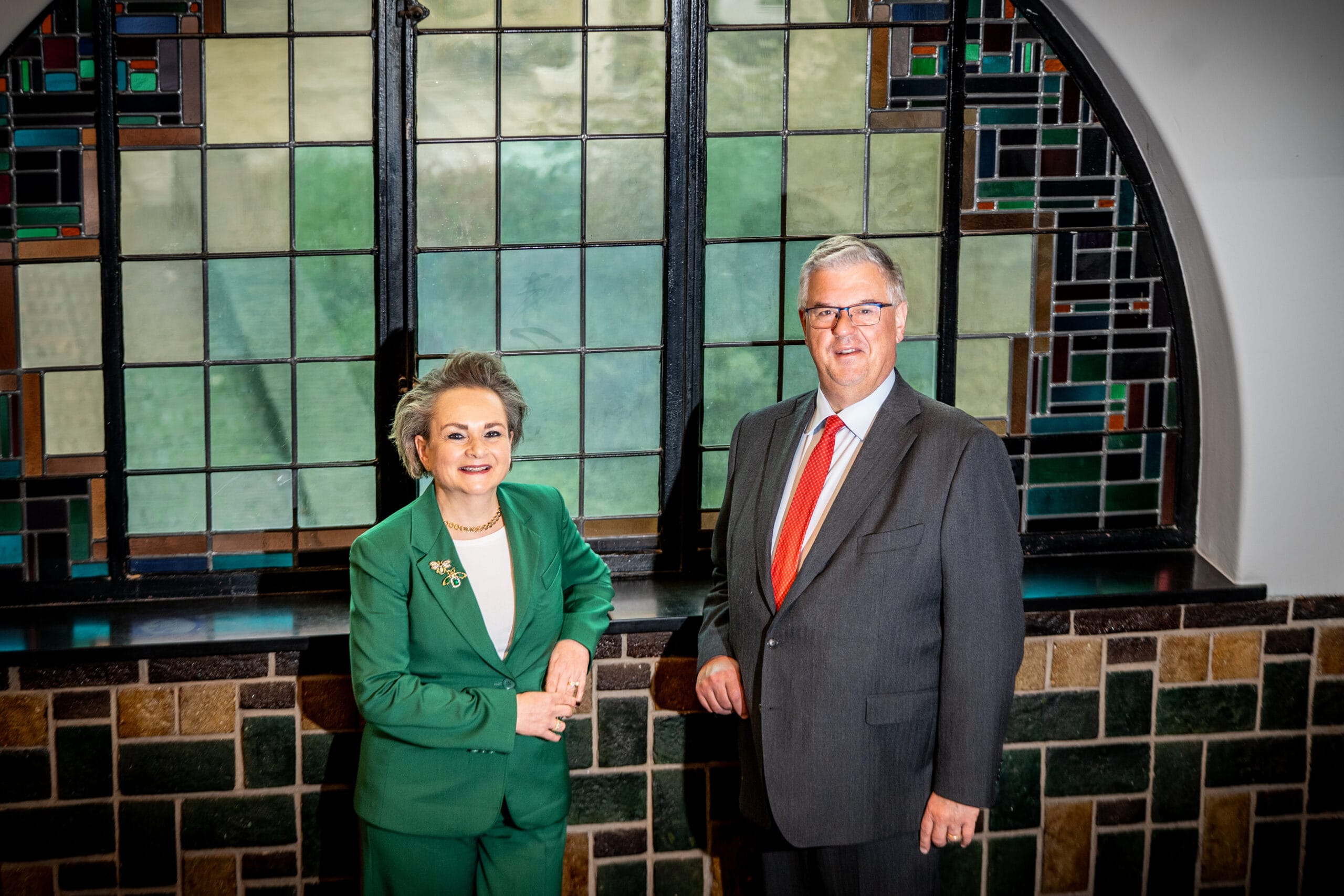
The regions Foodvalley and Lifeport Regio Arnhem Nijmegen would miss opportunities if they did not cooperate. That is the opinion of René Verhulst, mayor of Ede. He should know, as he is chairman of the Foodvalley region and has also been a member of The Economic Board Regio Arnhem Nijmegen for eight years. He is happy to see that such cooperation is happening more and more often.
René Verhulst has been mayor of Ede since 2017. From that position, he chairs the Foodvalley region, a triple-helix cooperation of eight municipalities in Gelderland and a small part of Utrecht. "I was also asked to join The Economic Board Regio Arnhem Nijmegen in 2018. I didn't have to think long about that. As neighbours, we are intertwined. We are not competitors, but actually need each other. If it rains in the Foodvalley region, it drips in the Lifeport region. And vice versa."

René Verhulst
Wageningen University & Research (WUR) and Radboud University (RU)
According to him, there are plenty of issues crying out for collaboration: from housing to the economy and from staff shortages to the energy transition. Verhulst gives a concrete example: the NOVEX approach. This programme, run by the national government, is designed to accelerate and implement spatial planning projects in sixteen regions. Lifeport and Foodvalley together form one of those areas and are working on a single implementation agenda. Verhulst: “We’re working together and sitting down with central government as a united front. That’s working out very well.”
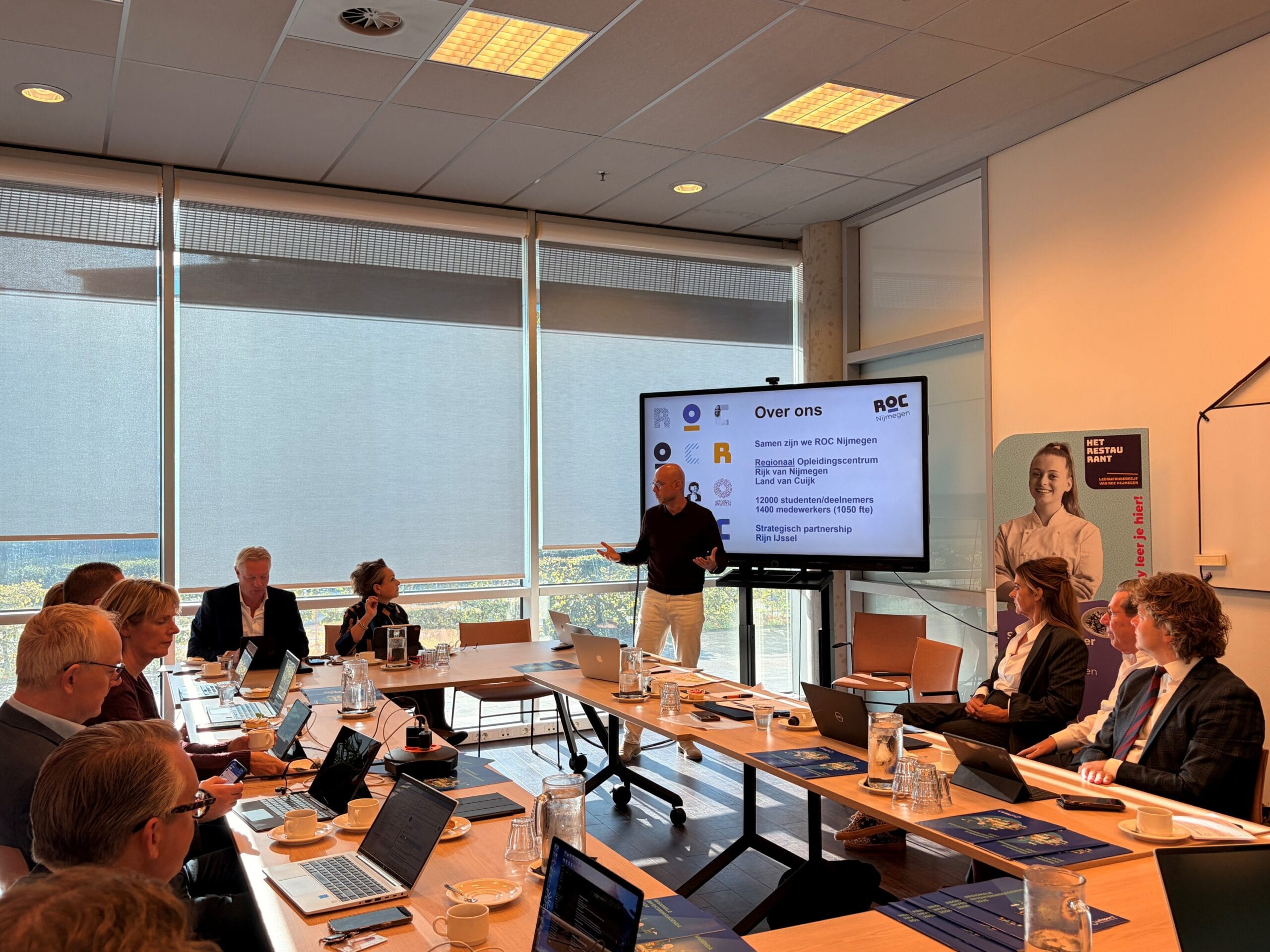
At a scientific level, the two regions come together in the OnePlanet Research Centre, where Wageningen University & Research (WUR) and Radboud University (RU) collaborate. This has already led to several concrete innovations, such as a swallowable sensor pill to monitor digestive processes and, in the long term, possibly detect intestinal inflammation. Verhulst: “When WUR, with its knowledge of nutrition and the living environment, and RU, with its technological and medical expertise, join forces, you become a serious player on the international stage. We’re really talking about the very top of the academic world. But we mustn’t forget the higher vocational education (HBO) and senior secondary vocational education (MBO) institutions either. Especially given the labour shortage we’re facing. Both regions have a great deal to offer in this regard too, and there are all sorts of opportunities for us to strengthen one another.”
The municipality of Ede has a large cluster around defence. "We have a military barracks dedicated to innovation, with issues such as 'How do you get water in the desert?', 'What do you eat on a mission?' and 'How do you process waste?' Jan van Dellen (director of The Economic Board Arnhem Nijmegen, ed.) put us in touch with innovative companies that can help with that."
Learning from each other
He says it is good to embrace the differences between the two regions. "If you are too much alike, working together is often actually more difficult," he says. Therefore, it is not necessary to act together on every issue. "When it comes to agricultural issues and the nitrogen discussion, we as Foodvalley have direct contact with the state. Similarly, there are themes that are more important for the Arnhem-Nijmegen region than for us. We have a different identity, both with our own issues. But precisely that makes it interesting, because we can learn from each other. We just complement each other very well."
Verhulst therefore believes that one should examine which partnerships are possible on a theme-by-theme basis. This can also extend beyond national borders. “With Foodvalley and Lifeport, we are part of the Rhine-Waal Euregio, alongside German cities such as Düsseldorf, Cologne and Duisburg. We have launched a project with them focused on creating green neighbourhoods. We are all grappling with the same issues. Everyone has their own experiences with these, and that’s very interesting.”
According to him, the cooperation between Foodvalley and Lifeport is going very well.
"If there is something, we know where to find each other immediately, with short lines of communication. I feel that over the years we have come closer and closer together. The province of Gelderland also encourages this. Together, we are really working on the issues of the future."
This article was published on Kijk op Arnhem Nijmegen - May 2026