In July, the European Parliament approved the European Chips Act, a programme set to run for many years. The aim is for 20 per cent of global chip production to come from Europe by 2030 (currently, this figure stands at around 10 per cent). In the coming years, tens of billions of euros will be invested in the chip sector.
In the Arnhem-Nijmegen region, where Lifeport is based, there is a large cluster of companies specialising in semiconductors (chips), with a particular concentration in Nijmegen. What does this new European legislation mean for the region and the Netherlands? We discussed this with Tom van der Dussen, semiconductors cluster manager at the national trade association High Tech NL.

Tom van der Dussen
Putting the cluster more in the picture
Van der Dussen outlines, "Nijmegen is one of the four major semicon clusters in the Netherlands (alongside Delft, Eindhoven and Enschede), with members such as Besi, Boschman, Trymax, NXP, and Nexperia. Many supplier companies are also present here. With this strong cluster, Nijmegen could put itself on the map a bit more, show what you've got."
See the overview of thesemicon sector in Lifeport
RF and packaging
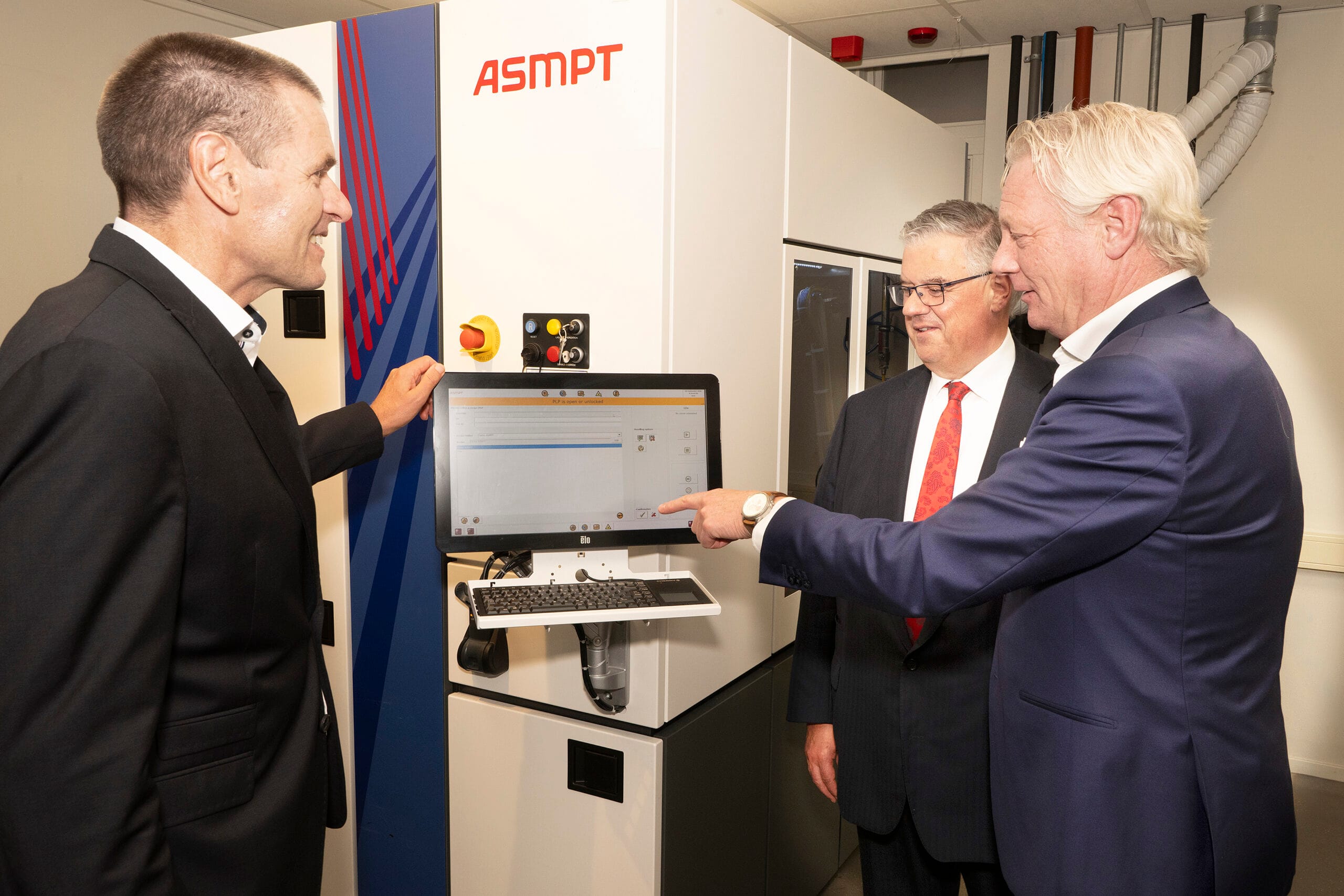
According to Van der Dussen, Nijmegen is a leader in RF (Radio Frequency) technology, a widely used technology. There are quite a number of interesting companies here in that field: Ampleon, Nexperia, NXP and PinkRF. The second specialisation he mentions is packaging – the material surrounding the chip that provides protection and connects it to other components. With companies such as Besi, Boschman, Sensio, ASMpt and the knowledge organisation CITC, the region offers a strong cluster.
Competence Centre
The EU Chips Act consists of several components. One is the national Competence Centre (CC) that each country is allowed to build. It will be a focal point to share knowledge around semicon. It is partly funded by Brussels and partly by the national government. The Ministry of Economic Affairs is currently looking around: who is interested and is the right party to set up the CC. Such a CC will work for the entire Dutch semicon industry.
"The European money will soon land in a region that makes itself visible. Here are many good parties with knowledge of the important technologies RF and packagig. We are of course also picking up in the region what people think is an important spearhead."
Pilot lines
The Competence Centre will soon be the coordinating point for the so-called pilot lines, companies and organisations developing innovations in the semicon field. They receive help to get from lab to fab, thus closing the gap between development and marketing.
Van der Dussen explains: "Suppose there will be a pilot line in Spain, which will produce chips for a specific purpose. That also needs packaging and could come here to talk because here is the knowledge and expertise on that part of chip production. That's why it's important to hold your knowledge and expertise in a region. You cannot be a champion in everything. Make sure you are very strong in a few areas and serve the whole of Europe in those areas. That is also beneficial for the whole of Europe, not inventing the wheel everywhere."
"That is what the EU Chips Act could mean for the Arnhem Nijmegen region. There are dozens of companies in the sector here if you manage to hold on to them and if they all grow 10 to 20 per cent, then you flourish as a region and then new companies will naturally join."
About High Tech NL and Tom van der Dussen

Since 2021, Tom van der Dussen has led the High Tech NL cluster Semiconductors. Supported by a team of experts, he plays an important role towards the more than 100 companies within this cluster and towards the broad ecosystem within the Netherlands.
The High Tech NL Semiconductors cluster is recognised as the 'first point of contact' within the Dutch industry and has close ties with politicians, international companies and parties, as well as similar communities around the world.
Among other things, Tom strives to unite and connect all individual companies. In this way, they exchange knowledge, create (international) partnerships to develop new innovations and, of course, increase their company's business. Close partnerships and mutual interests are of paramount importance to remain or gain global leadership.