How can you use the brainpower and design power of makers and designers to solve major social issues, such as energy transition and climate change? Meet Arnhem-based designer Floris Schoonderbeek who stood at the foot of the Lolo charging point.
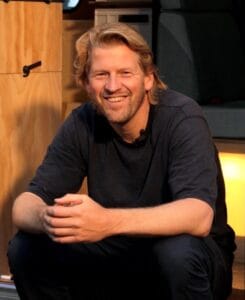
Designer Floris Schoonderbeek(Studio FS): "The creative sector in Arnhem can be of great added value in any other field. With IPKW, Connectr, Alliander, Arnhems Buiten and all relevant education, Arnhem has proven itself as an energy city. Arnhem has both the working climate and the energy knowledge. This offers great opportunities. It should be a matter of course to involve the creative sector in this. Not incidentally, but right into the capillaries of every Arnhem company. Then the magic mix of energy, innovation and creativity will work. And that makes Arnhem a very attractive business climate for energy companies."
How do you use technology for social change? To do so, you need to look not only at technology, but also at people and their behaviour.
Schoonderbeek recounts the process that led to the Lolo charging stations used worldwide: "In 2008, together with two colleagues, I entered a design competition organised by Alliander, Gemeente Arnhem and design platform OPA. The assignment was: design a charging station for electric cars. It was good of Alliander to involve creatives in such an issue.
Dirk Claessens, Maarten Verweij (Design agency Since 1416) and I decided to focus not so much on what the charging station should look like, but what electric driving means for people. How can you fit charging into everyday life?
There were 65 participants in the competition, all technical agencies. We were the odd man out. But we nicely did get a wild card for the final because of our more conceptual approach."
Smart power strips in the front garden
"People by nature don't like change," Floris continues. "So you have to think of something to win them over, to make change attractive. So we came up with not a charging station, but a whole community with smart power strips that people could simply hang in their front yard. Via an app on their phone, electric drivers could see where in Arnhem they could charge their car. We had made a map with all the locations, preferably near a nice coffee shop or a beautiful city park. If you do have to wait for your car battery to recharge, then preferably in a nice spot.
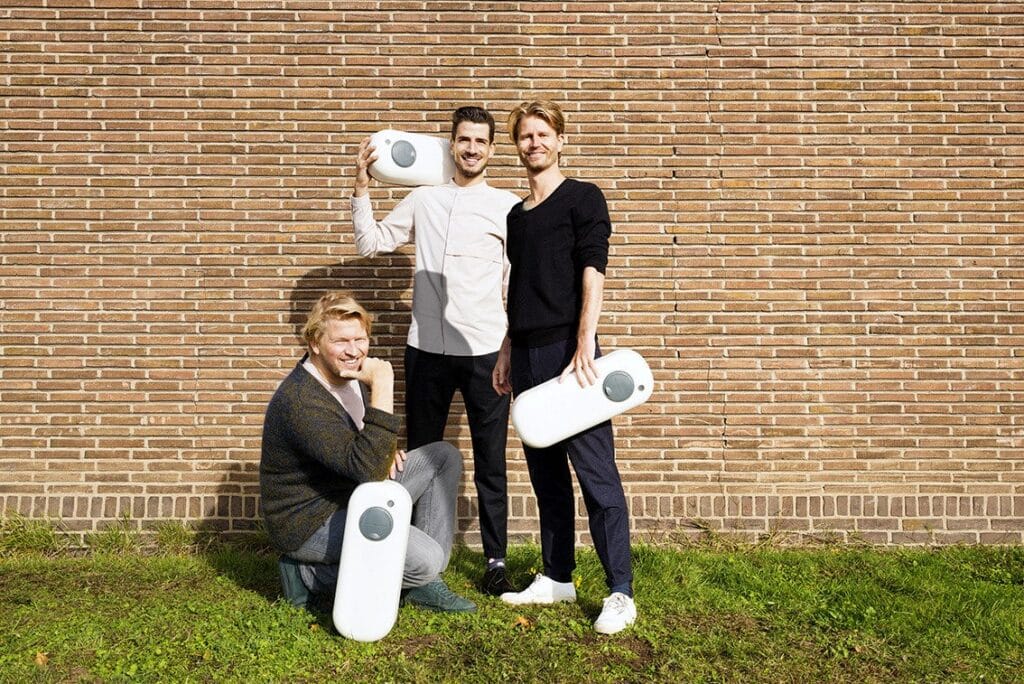
We also chose a cuddly design, in which you still recognise the socket and with enough space for the changing technology. Love to Load (LoLo) was born."
Guerrilla charging
Alliander was charmed by the concept and the trio won the competition. They were allowed to develop 10 prototypes.
Floris: "Of course we were happy with the recognition. But a cool design alone will not get you there; it is about the behavioural change you want to bring about. So communication was at least as crucial. Our goal was to build a community with charge points for and by electric drivers. So we developed charging passes and linked users via an app. We hung posters around town to promote electric driving. We even organised plug-in parties, where the power for music and cooling came from a charging station. And there was a guerrilla charging website, mapping publicly accessible power outlets. In other words, where you could tap power for free."
NewMotion
For the technology on the inside of the LoLo charging points, the trio partnered with Amsterdam-based NewMotion, also a start-up at the time, with a shared ambition. Floris: "From the start, we had a very pleasant cooperation with NewMotion. Maarten, Dirk and I became shareholders in NewMotion ourselves, so we were at the table as equal parties. They thought cool design was just as important as we did and embraced our creativity.
But it remained two worlds coming together and then it is always give and take. The first batch of 1,000 LoLo's was far from what we envisaged. But you do need those first 1,000. Product development is a whole process that can take years."
Red Dot Design Award
In 2016, the LoLo charging point won the Red Dot Design Award, a major design prize. Meanwhile, LoLo had become one of the world's best-selling charging points, with as many as 90,000 charging points. It is made to fit into existing infrastructure, both in car parks and in people's homes: on walls, garden fences, traffic signs and even mounted under a letterbox.
Worldwide
And in 2017, NewMotion was sold to Shell. What started with ten charging points in Arnhem grew through the Netherlands and Europe into a global network for electric driving, with over 90,000 charging points and more importantly the same number of charging card holders, because they have to do it.