There is a growing need for energy hubs in an increasing number of business parks, in order to coordinate energy consumption effectively and make smart use of available capacity. However, developing such a hub is challenging in many respects. The EIGEN project aims to make this easier. Miloš Bunda and Robert-Niels van Droffelaar explain how.
EIGEN (an acronym for Energy Hubs for the Integration of Large-scale Renewable Energy) is a partnership comprising sixteen organisations, including Connectr, Alliander, TNO and the University of Twente. From 2022 until the end of 2025, they will be working, amongst other things, on a blueprint for the large-scale roll-out of energy hubs.

“The better you can coordinate everything locally, the less transport you need across the vulnerable infrastructure,” he continues. “It makes perfect sense for businesses on an industrial estate to make joint arrangements to avoid peaks and to balance supply and demand. They can also organise things together, such as a large central charging point or collective heat pumps. These are all tasks for energy hubs.”
These are new phenomena within the energy landscape, as Robert-Niels van Droffelaar is well aware. He is an Energy Business Developer at Oost NL and a member of the core team of the energy transition network Connectr. Recently, he has been dealing with energy hubs more and more frequently. “To this end, we have launched an acceleration programme, with ten pilot projects in the region, six of which are in the province of Gelderland.”
But realising an energy hub is challenging and can sometimes take up to ten years, the two indicate. It is not just about technology, but also about good coordination. Bunda: "There must be coordinating activities, across all companies. This must be done impartially. So apart from the technology, you also need a mechanism to organise everything properly." Van Droffelaar: "You become dependent on your neighbour for your energy needs, instead of just getting it from the socket. That requires trust."
EIGEN (an acronym for Energy Hubs for the Integration of Large-scale Renewable Energy) is a partnership comprising sixteen organisations, including Connectr, Alliander, TNO and the University of Twente. From 2022 until the end of 2025, they will be working, amongst other things, on a blueprint for the large-scale roll-out of energy hubs.

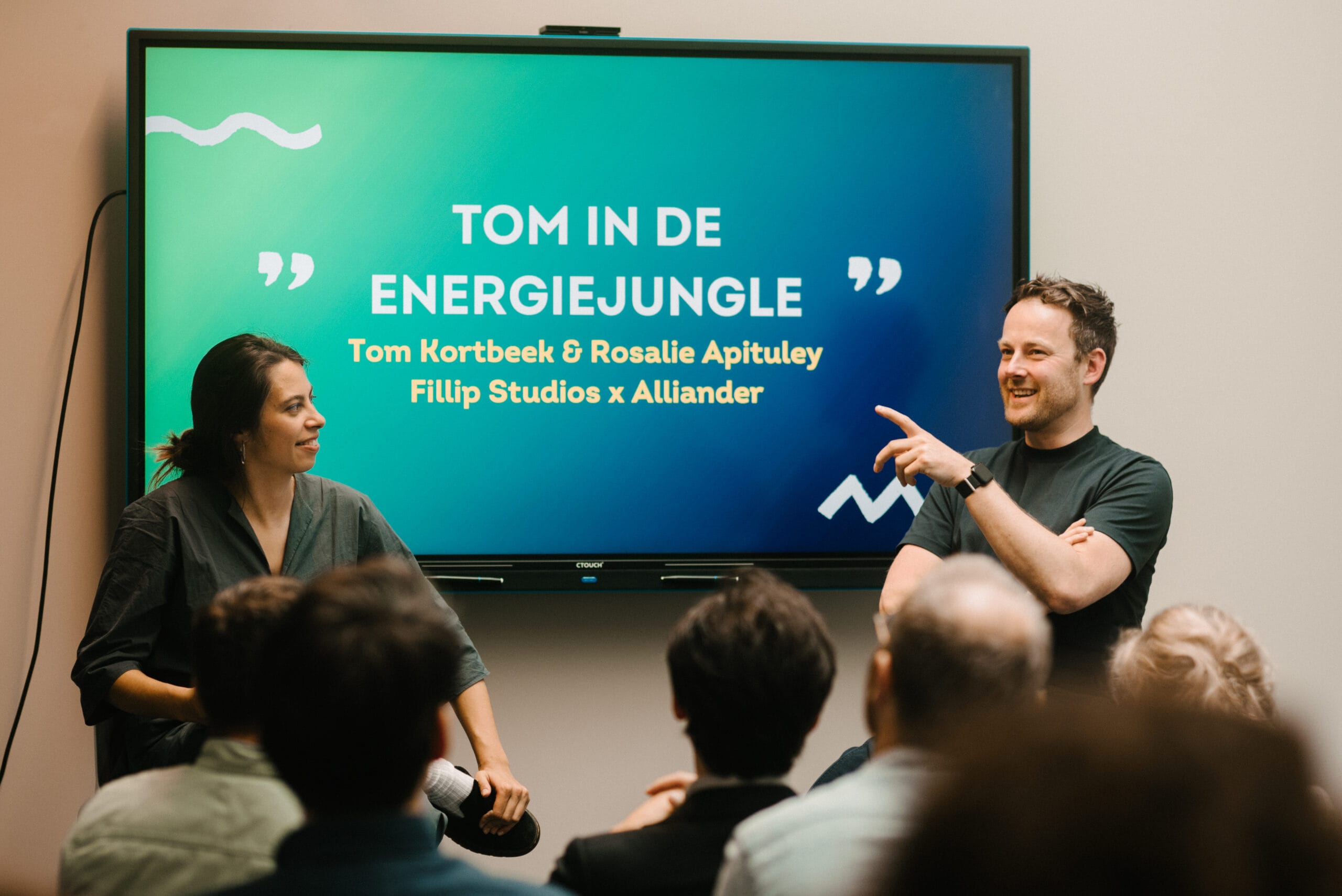
Left Milos Bunda and right Robert-Niels van den Droffelaar
Local tuning
Miloš Bunda has been working in the energy sector for over thirty years, the last 19 of which as an independent consultant. He is the technical lead for EIGEN. He explains why there is a growing demand for (smart) energy hubs. “Electricity is increasingly being generated in a decentralised manner, but the energy grid was not designed for this, and large energy companies cannot manage it effectively. You need something to act as an intermediary between the parties, to support the local energy community. That is what energy hubs do. This isn’t just about electricity, but also, for example, heat and hydrogen. These must be organisations without any public, political or commercial interests.”“The better you can coordinate everything locally, the less transport you need across the vulnerable infrastructure,” he continues. “It makes perfect sense for businesses on an industrial estate to make joint arrangements to avoid peaks and to balance supply and demand. They can also organise things together, such as a large central charging point or collective heat pumps. These are all tasks for energy hubs.”
These are new phenomena within the energy landscape, as Robert-Niels van Droffelaar is well aware. He is an Energy Business Developer at Oost NL and a member of the core team of the energy transition network Connectr. Recently, he has been dealing with energy hubs more and more frequently. “To this end, we have launched an acceleration programme, with ten pilot projects in the region, six of which are in the province of Gelderland.”
But realising an energy hub is challenging and can sometimes take up to ten years, the two indicate. It is not just about technology, but also about good coordination. Bunda: "There must be coordinating activities, across all companies. This must be done impartially. So apart from the technology, you also need a mechanism to organise everything properly." Van Droffelaar: "You become dependent on your neighbour for your energy needs, instead of just getting it from the socket. That requires trust."

Blueprint
EIGEN recognises the importance of energy hubs, but also the challenges they present. “The project is designed to provide guidance and tools,” explains Bunda. “We act as a guide through all sorts of challenges, such as cost calculations and contracts. We want to prevent parties from having to reinvent the wheel time and time again. It simply needs to become easier for organisations to develop, operate and maintain an energy hub.”EIGEN is primarily working on a blueprint consisting of four phases: exploration, ‘research and design’, implementation, and ‘operation and maintenance’. Van Droffelaar: “The blueprint is primarily intended to ensure we are all speaking the same language. An energy hub like this could be of interest to a great many parties, but we do need to understand one another.”
"Each phase in the blueprint consists of a number of steps to go through," Bunda explains. "To this end, we have developed all kinds of tools, such as decision trees and supporting documents. You have to think, for example, of standard contracts or a guide to applying for funding. We are now testing many of these products. This eventually creates a kind of product catalogue. This gives you as a developer everything you need."
Tailor-made
EIGEN focuses on business parks across the country. Van Droffelaar: “An energy hub is worth considering for any business park, but that doesn’t mean every business park should go ahead with it. Some locations are more suitable than others.” Bunda: “It’s always a bespoke solution. A site with distribution centres, with a lot of roof space and therefore plenty of room for solar panels, has different characteristics to heavy industry. Home furnishing centres also have their own specific features.”"There is a lot of demand," notes Van Droffelaar. "Many entrepreneurs have their backs against the wall if they want to grow. Grid congestion (more demand for transmission of electricity than the grid's transmission capacity, ed.) is the biggest challenge. That's where other forms of energy come in. It also fits well with the circular way of thinking." Bunda concludes, "It is certainly not just about making money. It's about removing constraints so that ultimately there is figurative energy for different parties to flourish together."