The new Rijnstate Elst day hospital is climate-neutral, making it unique in Europe. It uses solar panels and hydrogen to generate energy. But that is not the only reason why the term ‘hospital of the future’ is heard so often, as a conversation with Hans Schoo and Marcel Spanier reveals.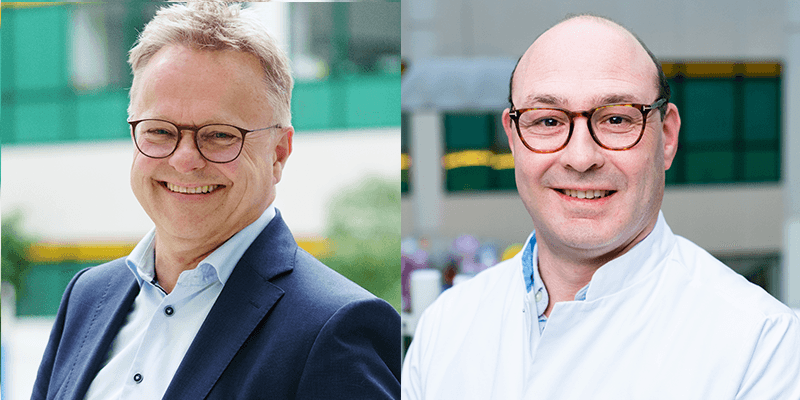
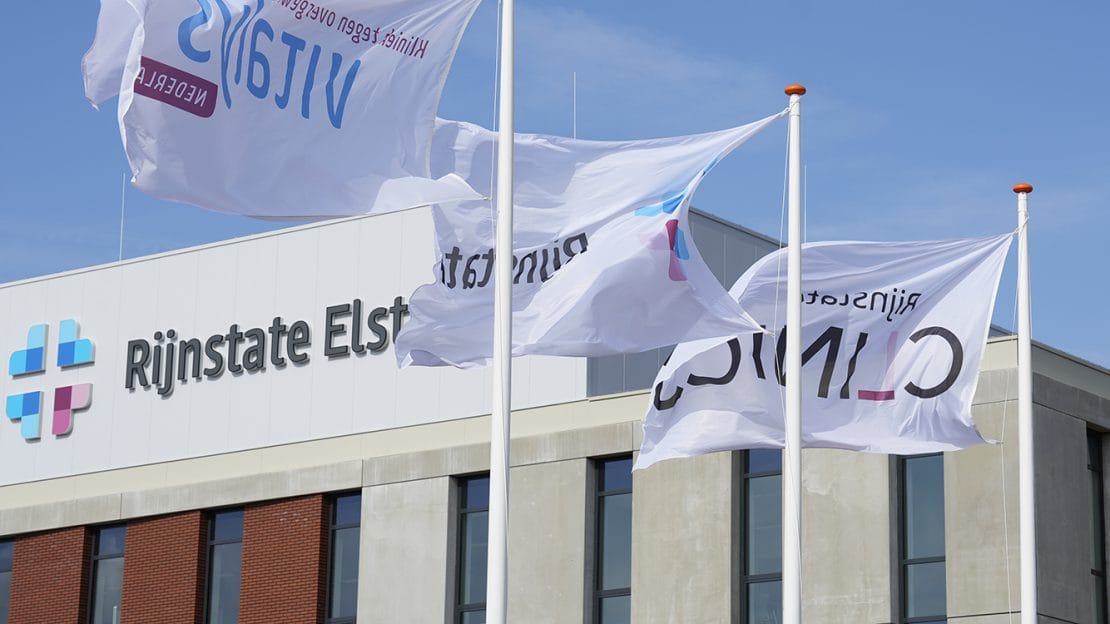
With the strike of a gong, the hospital officially opened the new Rijnstate branch in Elst on 26 June. A symbolic moment and one that had been eagerly awaited. The new site replaces two other locations: Velp and Arnhem-Zuid. A few final activities are still taking place there, all of which will be relocated to Elst in the near future.
Fewer metres, same care
“The building in Velp is old, which incurs a lot of extra costs. The building in Arnhem-Zuid also has its drawbacks. It wasn’t really suitable for providing medical care,” explains Hans Schoo. He is a member of the Executive Board of Rijnstate, with construction among his responsibilities.
“Furthermore, there is strong population growth in the southern part of our catchment area, where we did not yet have a presence,” he continues. “Thanks to this replacement, our property portfolio is once again ready for the future. We are moving from 26,000 square metres in Velp and Arnhem-Zuid (combined, ed.) to 12,500 square metres in Elst. This means lower costs, whilst we provide the same level of care.”
Key specialist departments that were based in Velp are now operating in Elst, explains Marcel Spanier. He is a gastroenterologist and a board member of the Rijnstate Medical Specialists’ Cooperative. He is also responsible for construction matters. “The dermatologists, pain specialists, ophthalmologists and everyone from Vitalys, the clinic for obesity, are now based entirely in Elst. Some specialists have their main practice there, and all the others can work there.” Schoo: “It is a multifunctional and multidisciplinary hospital. Elst is a wonderful addition to our site in Zevenaar, which focuses mainly on planned care, and the one in Arnhem-Noord, which handles a lot of emergency care and interventions.”
Proudly
The term ‘hospital of the future’ has been used extensively since it opened. This is due to its state-of-the-art equipment, such as a special CT scanner for rapid cardiac examinations, and above all because of its sustainable nature. Schoo: “When you build a new facility like this, you’re doing it for at least thirty or forty years. For us, this was the perfect opportunity to make it truly sustainable from the outset.” Spanier: “The healthcare sector accounts for seven per cent of CO₂ emissions, and we’re well aware of that. This was a great opportunity to get it right. We’re very proud of the result.”
Rijnstate Elst is, in fact, the first climate-neutral hospital in Europe. To achieve this, several innovations were implemented. Schoo: “We are an all-electric hospital: there is no gas pipeline. Sixty per cent of the electricity we need for heating, cooling and all our equipment is generated by solar panels. That amounts to a total of 2,300 square metres. We use hydrogen to store any surplus energy generated. There are two large tanks on site for this purpose. When the sun isn’t shining, we use that energy. An ingenious system also determines exactly when we need the energy supplier.”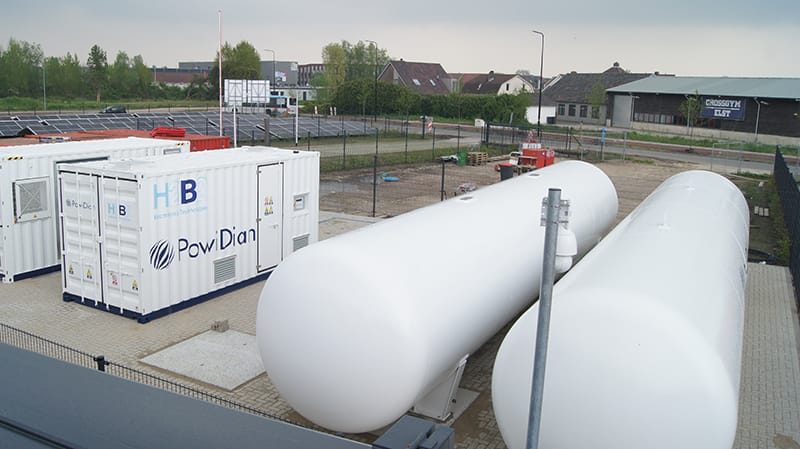
Bamboo wood
There are also many smart innovations in the building itself. Spanier: “All the brick-built sections of the façade are slightly slanted, which is useful for capturing sunlight. A lot of bamboo timber has been used for the floors and walls, which stores CO₂. The building is also very compact, with very little wasted space. For example, there is a single central waiting area per floor. The consultation and examination rooms have been kept as uniform as possible, so that all the different disciplines can use them. In this way, we’ve been able to significantly reduce the total floor area, resulting in a smaller footprint.”
The new building also facilitates video consultations, thereby reducing travel. Reducing the amount of waste is another priority. Schoo: “To achieve this, we have to deal with all sorts of requirements and regulations. It’s an exciting challenge to become greener in this area too in the coming period.”
Cross-fertilisation with businesses
A nice bonus is the fact that part of the premises is available to start-ups and scale-ups operating in the healthcare sector. Spanier: “We expect there to be mutual cross-fertilisation between doctors and businesses if they can easily approach one another to bounce ideas off each other. That will lead to new ideas and their more effective implementation.”
Rijnstate Elst also houses a branch of Bakker Bart. Schoo: “We consider healthy and responsible nutrition to be very important for our patients and staff. Our dietitians have been in discussion with Bakker Bart about the range on offer, with a wonderful result. The bakery is also open to local residents who simply want to pick up a half-loaf of brown bread, as well as to people waiting for their train at the nearby station who fancy a quick cup of coffee.”
Lifeport: businesses, knowledge institutions and public authorities working together
Bakker Bart is originally a Nijmegen-based company. Spanier believes that collaboration within the Lifeport region and beyond is important. “You don’t always have to reinvent the wheel yourself. That’s why The Economic Board is of interest to us: it’s a great platform for building bridges with businesses and research institutions. The Lifeport region is home to many key players who can benefit us: from Radboud University and Wageningen University & Research right through to, for example, Alliander.”
Schoo: “During the construction in Elst, we also worked very well with the local council. Contact with GPs, nursing and care homes, and home care services, amongst others, is also very important. A hospital must absolutely not be an island within society. We do this together.”