

Shippers want to become more sustainable, but how? Dirk Degroote of Nijmegen-based company Cognauship knows how to inspire captains in reducing their emissions as well as costs. "Being more economical with energy is currently the only lifeline we have left to meet short-term climate targets."
The market demand was clear: tugboats want to operate more sustainably and cost-effectively. But they often struggle with how. At his previous job, Dirk heard the stories but could not offer a solution. So he decided to change course. Together with Noud Seegers, he started the research company Cognauship.
"Before, I was always in meetings or away from home for a long time. I wanted to be in the field again as well as make time for my family."
And he got that time. Only in a different way than hoped. "In February 2020, we officially launched on the Noviotech Campus. A month later, the lockdown began. Everything was at a standstill, but not my thought process. It was obviously not a pleasant period, but it did give me the time and space to spend time with my children without responsibilities to a boss. And to think long, hard about my next steps. This was actually exactly what I needed."
A house made of Lego
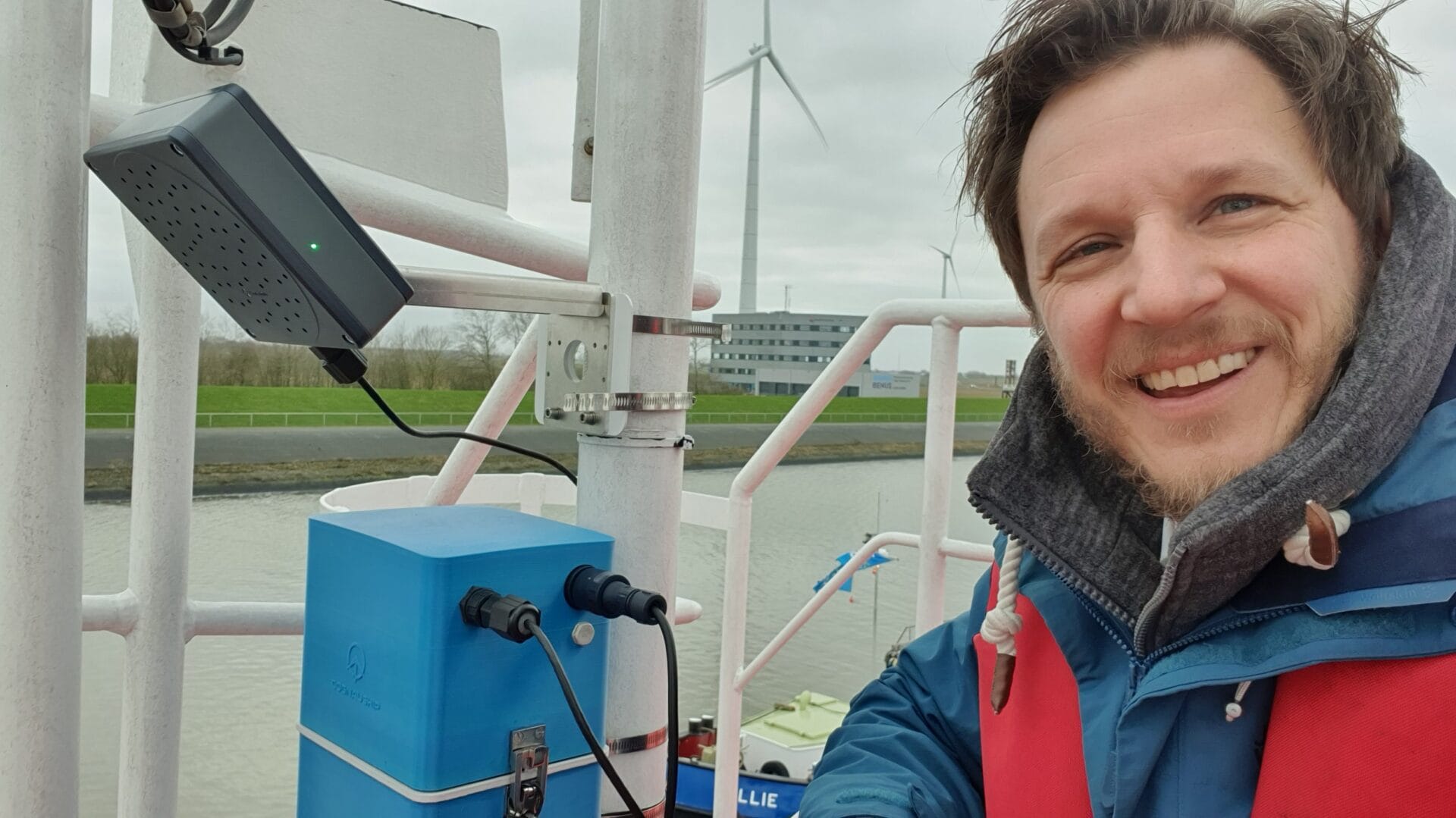
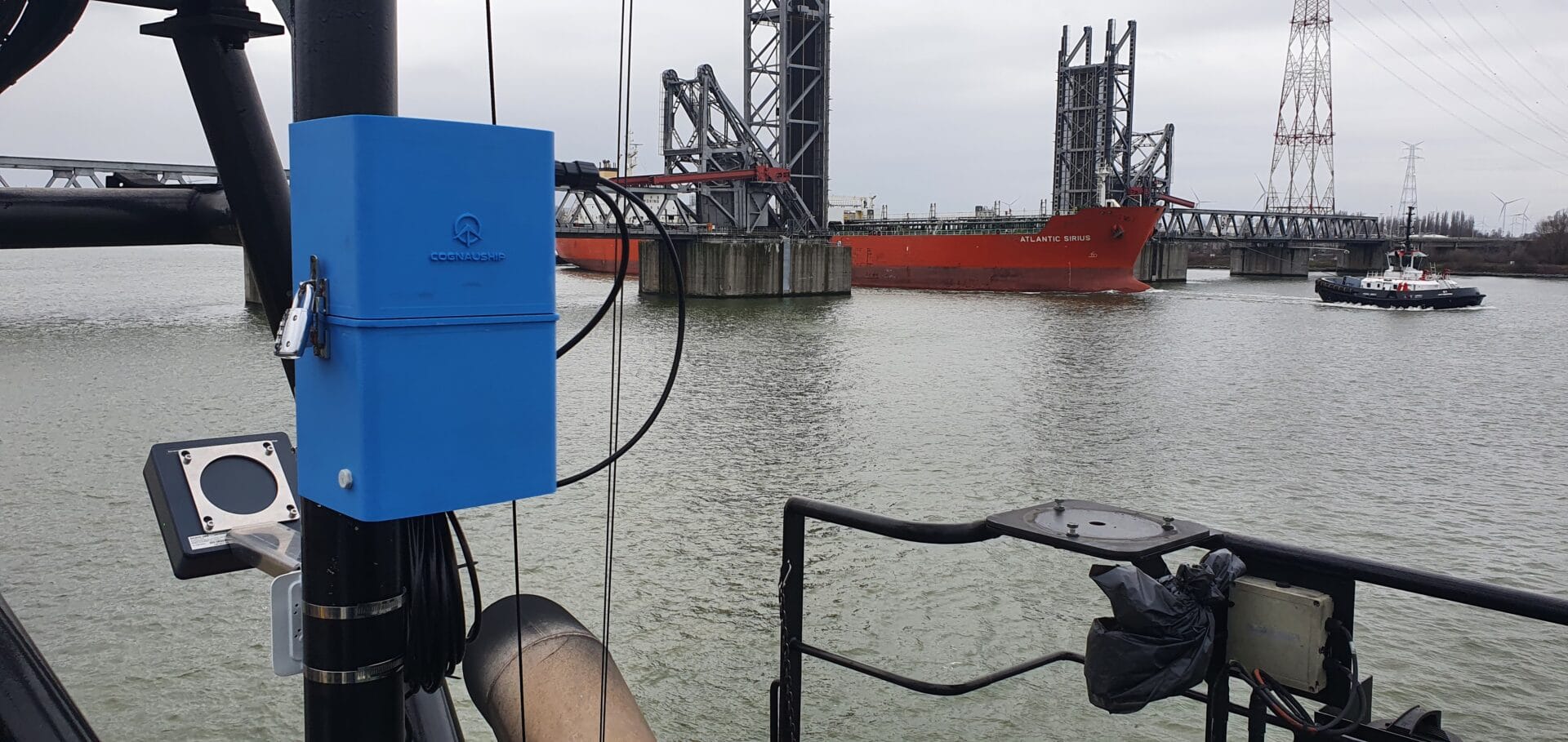
All that thinking led to a unique Internet of Things (IoT) solution, based on monitoring and thoroughly analysing the movements and exhaust noise of ship engines, resulting in the identification of potential savings. It sounds simple, but a lot of steps have to be taken behind the scenes. Indeed, it is a long way from sensor data to insights.
"You can think of that data as Lego bricks. When the data comes in from the ship, the cubes are scattered everywhere. I use specially developed algorithms for ships to sort them by size and colour and then use these blocks to build a house that is easy to understand and provides actionable insights. The customer only sees the house, but it took a lot of steps to get there.
We distinguish ourselves by taking the complete path. Most solution providers only offer the raw data and the platform. In other words, the box of Lego, sorted or unsorted. In most cases, the customer has to figure out for himself how to build the house."
Sustainability: please! But how?
"The problem today is really not that companies don't want to become more sustainable. They just simply don't know how or can't come up with a sound business case. We don't make sustainability for them, but explain to them how they can do it themselves. And for most ships, this is not a huge intervention at all, because 10 to 30 per cent fuel reduction can often be achieved with small changes. This often involves sailing at lower speeds or using other sailing techniques, but also logistics integration and optimisation. Think of it as The New Driving, but on the water."
Briskr and Municipality of Nijmegen
"In terms of expertise, we were already well placed, but doing business is a whole new adventure. That's why it was great that Briskr allowed us to spar a lot with other entrepreneurs and experts in the initial phase. An external, critical view is always welcome. Just that reality check: is our work really relevant? And if the answer is 'yes', that gives you a bit of extra self-confidence to continue."
Dirk is no stranger to the shipping industry, so his first order of business was with a major player. "We were allowed to test our prototype in the port of Antwerp-Bruges. And when that turned out well, other companies got inspired too. The municipality of Nijmegen asked us about our services to gain more insight into the emissions of ships passing the Waal in Nijmegen. In doing so, they were also keen to boost our Nijmegen business."
The municipality's investment proved worth its weight in gold, as many companies followed suit. "Also thanks to events organised by OostNL and our spot on the Noviotech Campus. That's where we build our network."
Noviotech Campus
"We are quite an oddity on the Noviotech Campus. Shipping was not present before our arrival, even though the market in Nijmegen is decent. We started with tugs, but now also do inland navigation vessels, because there was a demand for that from the region. In our backyard the Waal, some 300 ships pass by every day. So our work is also very relevant here."
A sustainable future
But as far as Dirk is concerned, his work won't stay relevant forever. "My dream is that everyone in inland navigation becomes aware of how to sail sustainably and acts accordingly in 2030. Preferably with our help, of course, because that would mean making a real impact. If everyone joins in, the climate goals for our sector will be within reach. And that is the goal right now."
This article previously appeared on Briskr's website.