Black Friday is just around the corner. For many people, it’s the perfect time to snap up bargains. Discounts are everywhere, the time pressure is intense, and all you hear is: ‘Everyone’s doing it, so I will too.’ But we also know that Black Friday leads to huge spikes in consumption. Items you might not actually need often end up unused in a cupboard after a short time – or worse still, in the bin. That’s a waste for your wallet and for the world around us.
The remarkable thing is: most people know this. We’re well aware of sustainability, waste and the circular economy. And yet we let ourselves be swept up by the discounts, by the sense of urgency, by social norms. That’s precisely why this isn’t a matter of information, but a matter of behaviour.
Impulses, Fear of missing out and social norms
Behavioural research shows that we often act on autopilot. Especially in situations with time pressure and temptation. Black Friday is a textbook example of this. Three insights play a major role:
- Autopilot: you don't think, you react to stimuli.
- Social norm: when everyone buys, it feels normal.
- FOMO: Fear of Missing Out - the fear of missing out on something - is a strong trigger.
If we really want different behaviour, we have to offer something in return. Not by saying Black Friday is bad, but by creating a break. An alternative. A social norm that shows: things can be different.
That is why Check Friday
The Arnhem-Nijmegen Green Metropolitan Region is launching Check Friday as a counterpart to Black Friday. This campaign calls on everyone to ask three simple questions before making a purchase:
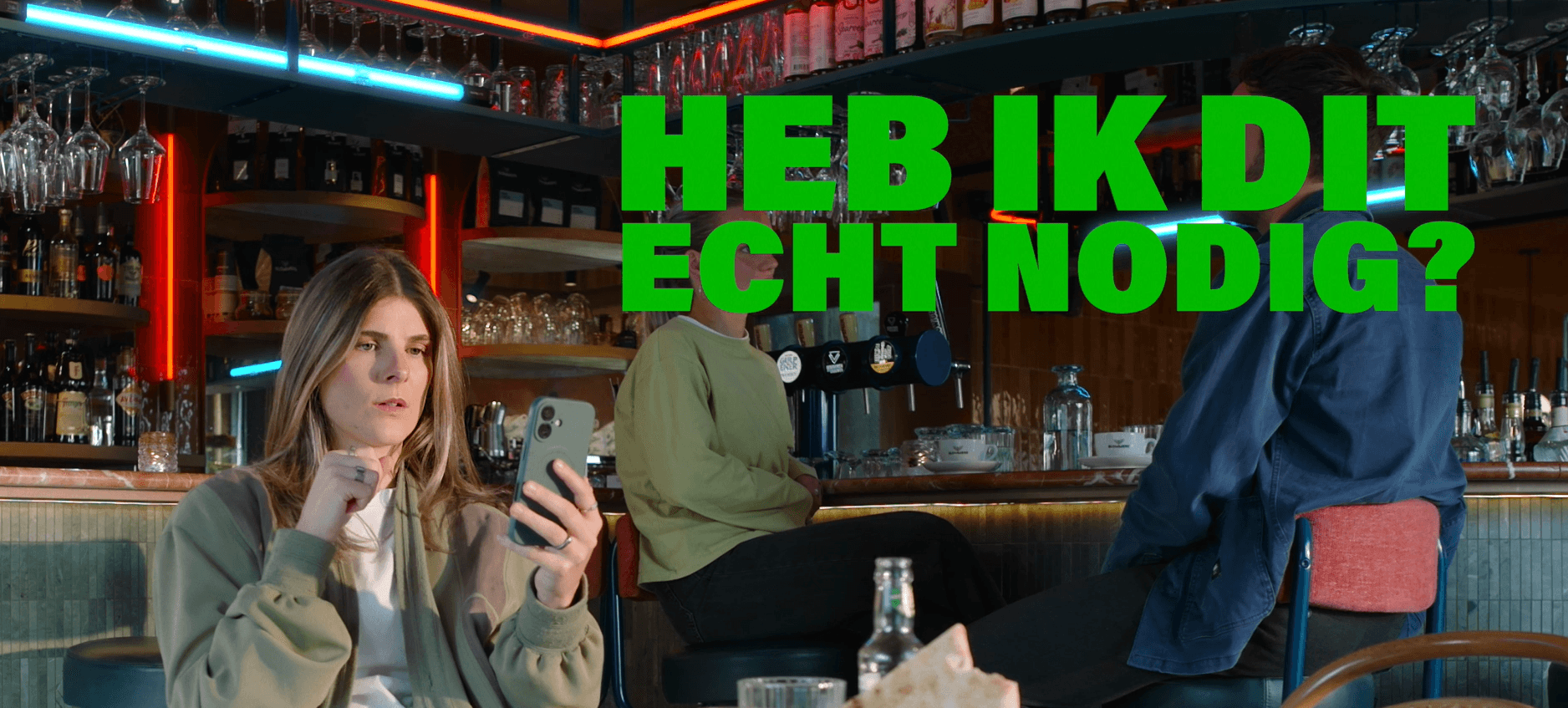
- Do I really need it?
- Can I buy it second-hand or refurbished?
- Can I borrow or repair it?
That short break makes the difference between an impulsive purchase and a conscious choice. You often save not only resources, but also money.
A visible alternative
In the coming weeks, you will see Check Friday all over the Lifeport region: online, in shops and in libraries. Posters show recognisable situations: a hesitant buyer, someone proudly wearing second-hand clothes, a neighbour lending his drill. Local entrepreneurs, thrift shops and repair cafes join in to show that things can be done differently.
Why conscious choice pays off
Black Friday is all about quick deals and low prices. But the real price is paid by the environment. Manufacturing, transport and waste put a hefty burden on our planet. By choosing to share, repair or second-hand, you save resources and energy. Moreover, it feels good to do something that really contributes to a sustainable future.
Participate and make an impact
Visit gmr.nl/checkfriday and discover circular alternatives in your local area: from charity shops to repair cafés.
At Lifeport Regio Arnhem Nijmegen, we’re turning Black Friday into Check Friday – a day when we think not only about what we want, but also about what the world needs.