The members of The Economic Board together form a powerful triple helix: entrepreneurs, public authorities and knowledge institutions that share a single common goal – building a vibrant, sustainable and internationally competitive region. The Board meets every two months at inspiring locations across the region. In September, the board meeting took place at Hoogwegt Group in Arnhem.
Since 1965, Hoogwegt has grown to become one of the world’s largest independent suppliers of dairy products. From its base in Arnhem, the company serves customers in more than 130 countries with a wide range of milk powders, dairy ingredients, cheeses and liquid dairy products. In doing so, Hoogwegt makes an essential contribution to the global food and animal feed industries.
New chairman of The Economic Board appointed
During the meeting, Alexandra van Huffelen, board chair of Radboud University, was appointed the new chair of The Economic Board. She succeeds Ahmed Marcouch. In line with the cycle, the chairmanship rotates between entrepreneurs, governments and knowledge institutions. With Van Huffelen as figurehead, education, research and innovation will have a prominent place in regional cooperation, with a focus on broad prosperity and a future-proof economy.
Our region visible in the National Investment Agenda
A statement by Edwin Ouwejan (Ministry of Economic Affairs) made it clear that, despite the cabinet’s caretaker status, the implementation of national policy is continuing in full swing. Cooperation between central government and the regions remains crucial. At the same time, issues such as nitrogen emissions and grid congestion are weighing heavily on the business climate, and the Netherlands risks missing out on investment – particularly in the most innovative sectors.
The National Investment Agenda, led by Wennink, applies the Draghi report to the Dutch context. This agenda calls for clear choices: which framework conditions are indispensable, and which flagship projects deserve priority? For the Arnhem-Nijmegen region, the answer is clear. Our strong clusters – Energy, Health and High Tech/Semicon – contribute directly to national and European strategic goals.
To realise this potential, three preconditions are essential:
- Solving grid congestion and investing in energy infrastructure.
- Space and speed in business parks and campus development.
- Investing in talent, skills and international appeal.
With strong clusters and the acceleration of campus development, the Netherlands can make tangible progress. Concise, focused regional profiles and concrete examples are needed to get this message across in The Hague – and to firmly anchor our region in the Investment Agenda.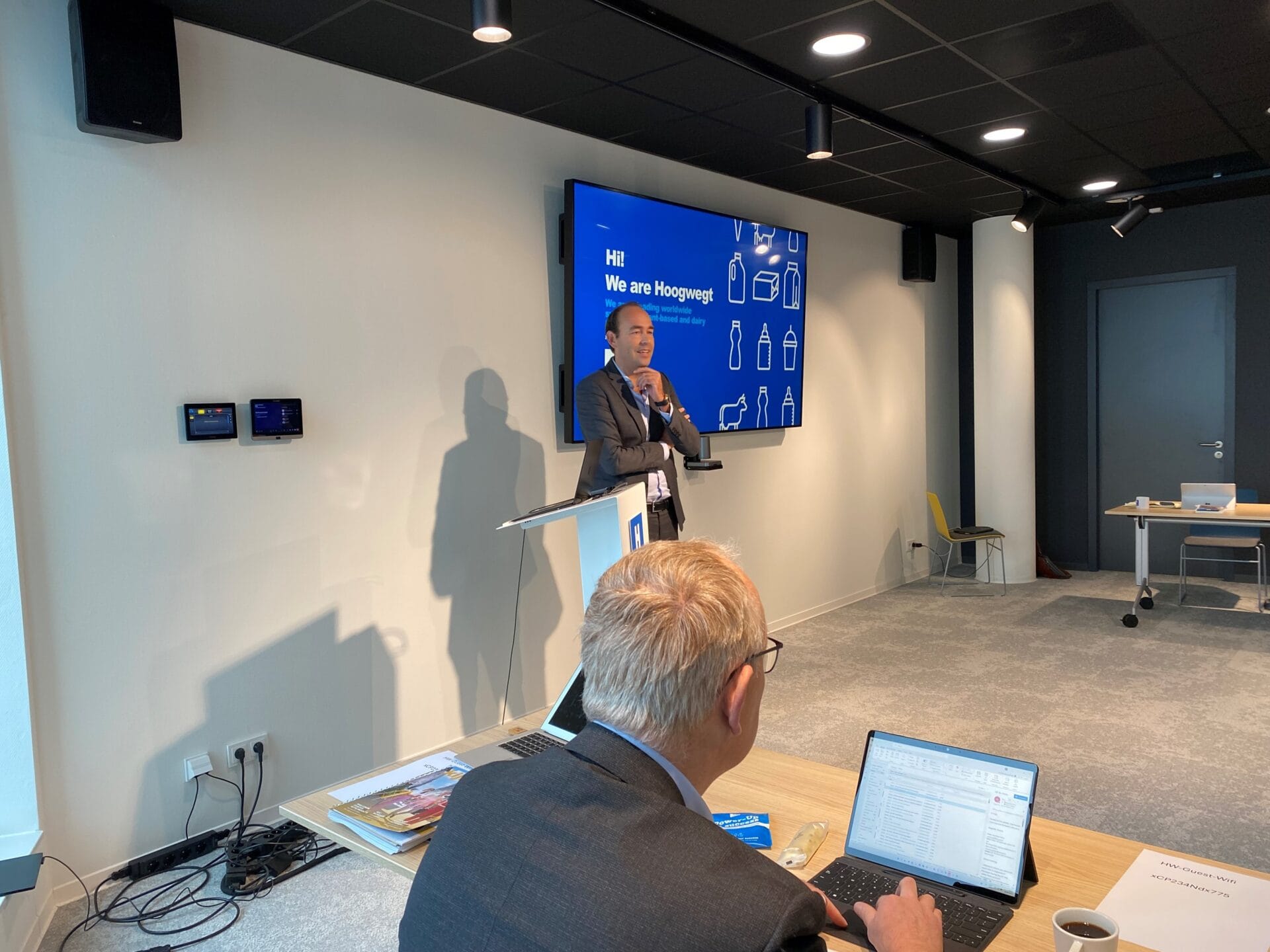
Defence task offers great opportunities for Lifeport Arnhem Nijmegen Region
Besides the Investment Agenda, the defence challenge also offers great prospects for our region. Defence faces huge investments with social and economic impact. Defence is already one of the largest employers in the province, but the task reaches further: safety, energy, housing and economic strengthening come together. Together with Brabant and South Holland, Gelderland is among the top three of the Dutch defence economy and even has the largest position in terms of space. This offers a strong starting position.
Linking opportunities with social impact
The defence task also provides linkage opportunities with added social value:
- Energy - own generation on barracks sites, also for surrounding homes.
- Construction - substantial investment in housing and facilities, coupled with housing construction for defence workers.
- Labour Market & Talent - strengthening skills and training in line with Defence's demand.
In this way, the Ministry of Defence can act as a driving force for the regional economy by linking up with existing strengths: Food, Health, Energy, High Tech & Semicon, and Transport & Mobility. The key lies in collaboration. Local authorities, regions and businesses must work together, with Oost NL as the organising force, to make it clear to the Ministry of Defence what we have to offer.
The key question is simple, yet crucial: What does the Ministry of Defence need, and what can our region deliver? By defining this clearly and collectively, Gelderland – and the Lifeport region in particular – can grow to become the centre of gravity of the Dutch defence economy.