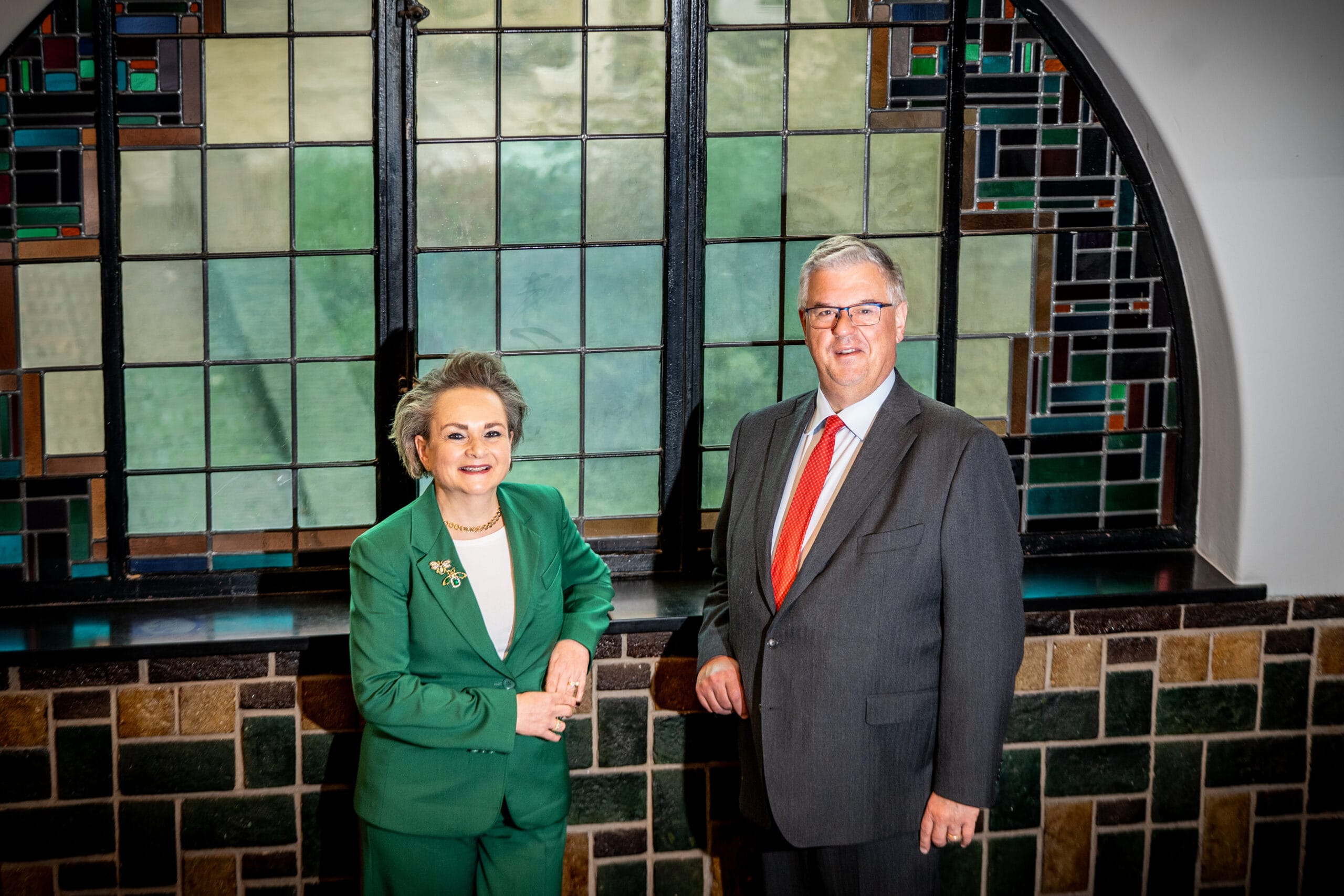
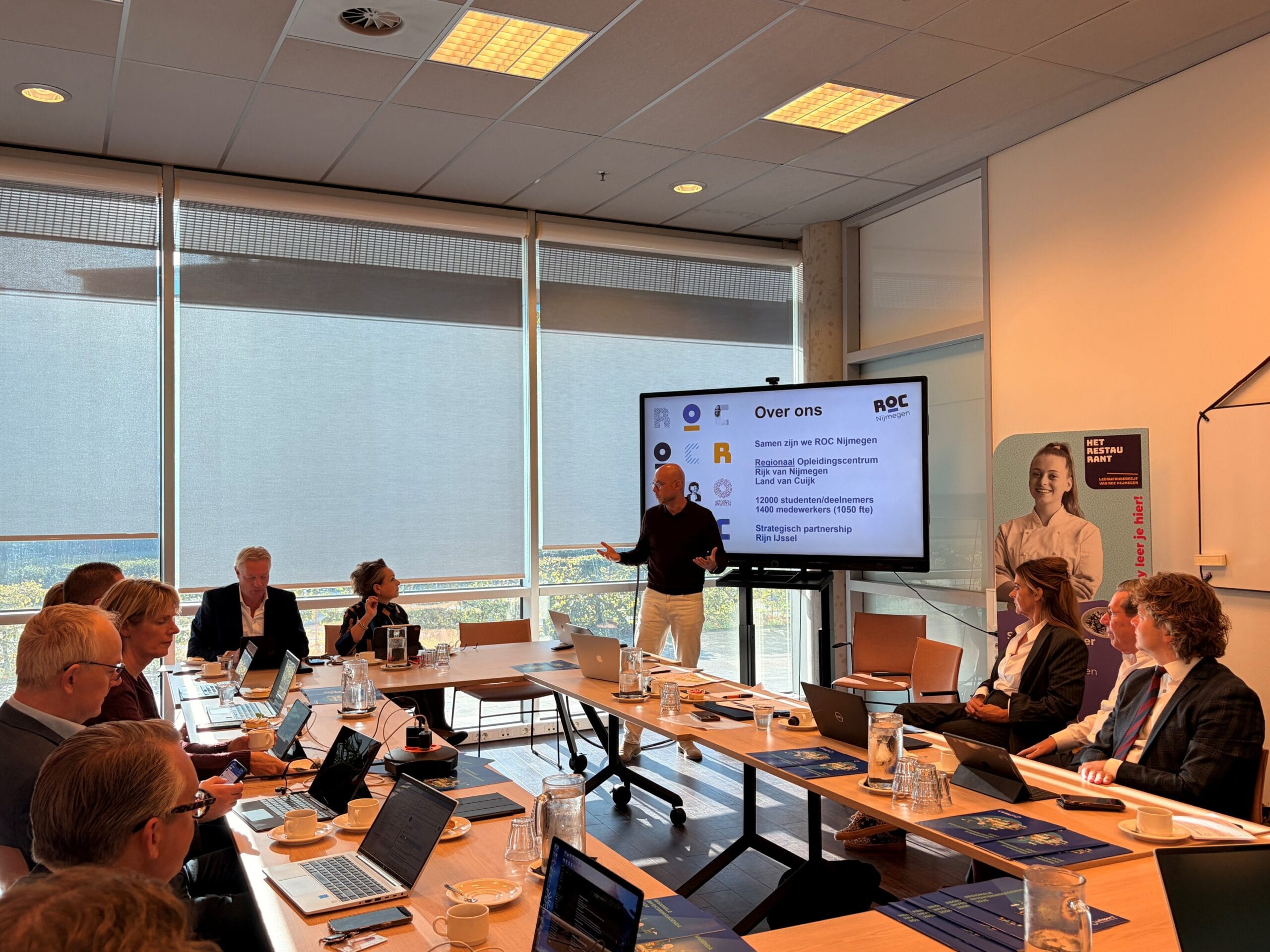
The first board meeting of 2024 took place at HAN University of Applied Sciences in Arnhem. HAN University of Applied Sciences provides students with education and carries out practice-oriented research to contribute to the world of tomorrow. HAN comprises 14 academies offering degree programmes, research and consultancy services. Approximately 36,800 students are currently studying at the Arnhem and Nijmegen campuses, enrolled on 64 bachelor’s programmes and 17 master’s programmes. Rob Verhofstad, Chair of the Executive Board at HAN and a member of The Economic Board, spoke about the region as a ‘Campus’: from school to knowledge partner. Bringing students into the neighbourhood and engaging with the public, with more than 30 innovation hubs (pilot projects, labs, workshops) across the region. These serve as learning environments for HAN students and professionals, covering areas such as hydrogen and circular construction.
The agenda for the Board meeting included a number of key discussion points regarding efforts to promote healthy and sustainable living in the Lifeport Arnhem-Nijmegen Region.
Perspective on the economy of the future
The Board members discussed with Provincial Executive Member Helga Witjes how we can work together to ensure a resilient and sustainable economy in Gelderland, from which the whole of society benefits. The Province of Gelderland’s coalition programme, ‘Gelderland Gewoon Doen’, sets out the aim of developing an integrated economic programme.
Integrated in two ways:
- A coherent implementation programme for targeted economic policies, e.g.: Innovation and internationalisation, Education and labour market, development of work locations, digitalisation, SME services, energy transition and circular economy.
- An integral vision on the economy that provides direction when making considerations in the broad provincial agenda: such as the business and entrepreneurial climate and the province's influence on this in, for example, spatial choices and the organisation of legislation and regulations.
As the ambition exceeds the available resources, the province has to start prioritising. During the board meeting, board members interacted with each other and many questions and comments were discussed, such as: Where do we as a province have the most impact? Where can we strengthen each other? But also: choosing what we don't do (anymore). What developments do we see coming our way? What does this mean for the province and what does it mean for municipalities, entrepreneurs and knowledge institutions? And what can we each do from our own role but also together?
Energy Hotspot
Board members also talked about the Arnhem-Nijmegen region being "place to be for Energy" in 2025. Energy can no longer be ignored in the Arnhem-Nijmegen region. There are places everywhere where residents and entrepreneurs show where innovations can lead. The energy cluster is strongly represented in the region with frontrunners like the grid operators TenneT and Alliander, with large investments, innovations from charging infrastructure, energy storage and hydrogen to testing and certification. This entire sector is crucial to the social task of energy transition, investing billions together. Of course, there are also bottlenecks, such as grid congestion and the tight labour market, but major initiatives are already underway here that are contributing to solutions.