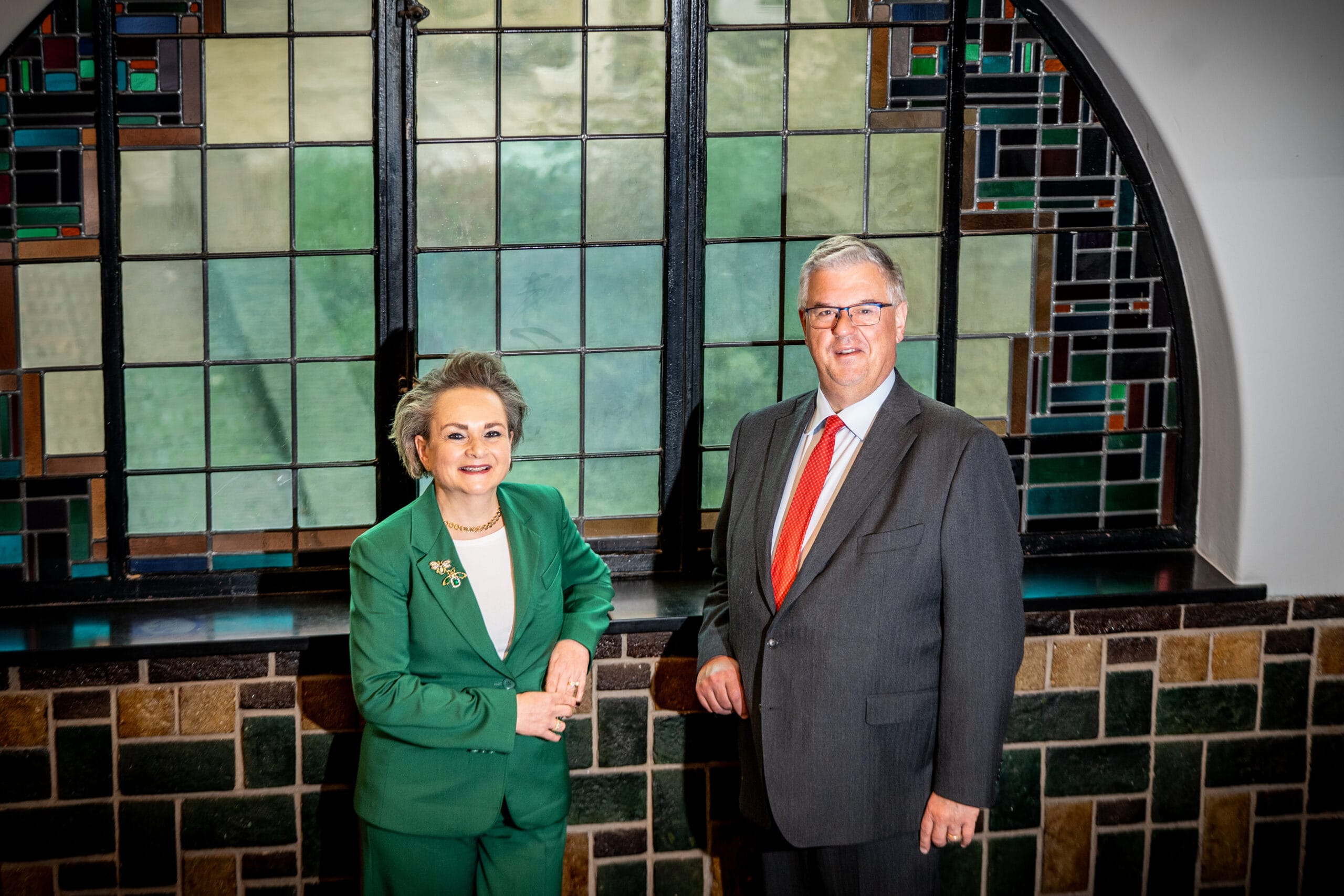
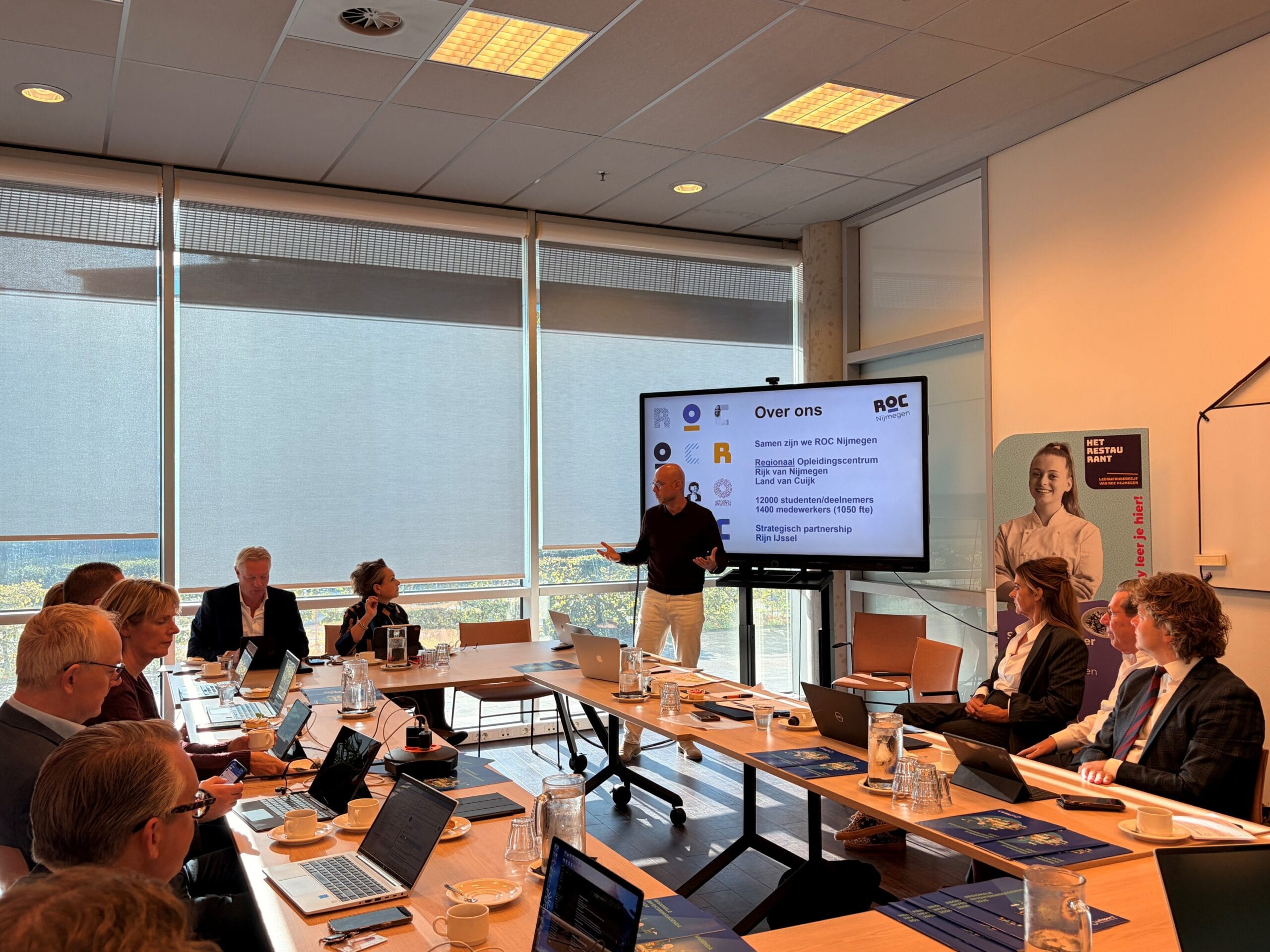
The board meeting on 16 June last took place at CCV in Arnhem. On 1 June, they celebrated their 65th anniversary. 65 years ago, CCV was founded by founders Cor and Bep van de Velden in Arnhem. What started as a small accountancy firm soon grew into the leading international payment partner they are today. From pioneering the first electronic payments in the Netherlands in the 1970s to offering mobile payment terminals and next-gen online payment services across Europe. The meeting covered two main topics; Region Arrangement Green Metropolitan Region and AI for SMEs.
Region Arrangement Green Metropolitan Area
In the Regional Agreement, the province, regions, local authorities and water boards set out a shared vision for how all challenges (such as housing, accessibility, the economy, energy, agriculture and the natural environment) will be tackled in a coordinated manner over the next 20 to 30 years. The decisions we take today will determine the opportunities we have in the future. All the central government’s objectives require space within the region. If we were to incorporate all these requirements, we would need 1.8 times the area of Gelderland. The central government is therefore requesting a spatial proposal from the province. The province of Gelderland is structuring its spatial proposal around seven regions: one regional arrangement per region, including the Arnhem-Nijmegen Green Metropolitan Region.
The Regional Arrangement for the Green Metropolitan Region consists largely of existing information, such as the Urbanisation Strategy, the area-specific plans, the Housing Deal 2.0 and the Regional Deal. In addition, new issues are also addressed, such as matters relating to energy, the (circular) economy and rural areas.
What sort of region do they want to be? What does that entail, and is it a good fit? How do we achieve this, and at what pace? This is worked out on a region-by-region basis, and agreements are reached accordingly. The triple helix collaboration of The Economic Board can provide strategic added value in this regard. If we want to be green and dynamic, health is also a key consideration. A green region is also a healthy region. Which industries or economic activities do we choose that will help make the region greener, but also which ones do we want to avoid? It is important that the Regional Agreement involves triple-helix collaboration and that the interests of businesses and knowledge institutions are also taken into account.
AI for SMEs
The Arnhem-Nijmegen region is characterised by a large number of innovation centres for artificial intelligence, which is also leading to an increase in the number of AI-related companies. Radboud University has over thirty years’ experience in this field. The added value of applying AI is wide-ranging. Since the launch of ChatGPT in November 2022, it has become clear to many people just what an impact AI has and will continue to have. A large number of ambitious entrepreneurs and leading companies in the region are working in and with AI.
How can we help our SMEs embrace AI, and how can we turn AI into an economic driver?
AI is currently dominated by the education sector. How can we involve entrepreneurs in this and enable them to benefit from it? Jon Feenstra, Project Co-ordinator for Research & Impact at Radboud University, gave a brief overview of Radboud University’s AI projects.
An SME Data Lab has recently been launched. This new lab supports SME entrepreneurs in data-driven business practices. Artificial Intelligence and Data Science students at Radboud University will be tackling data and AI challenges faced by SME entrepreneurs. However, Radboud is also involved in a number of major initiatives, such as the one with Alliander. A consortium is being set up to utilise AI in the energy transition and to make better use of AI within the electricity grid. What are the needs of the business community, and how can we contribute from a regional perspective? Dealing with AI is the key challenge for SMEs, rather than the technology or product itself. This requires further elaboration, which the board members will work on together with the project office.