At the end of June, members of The Economic Board gathered at Fort bij Rijnauwen in the province of Utrecht for an inspiring meeting on regional collaboration, policy advocacy and shared ambitions for the Arnhem-Nijmegen region.
Michiel Dijkman, chair of Economic Boards Netherlands (EBNL) and director of Economic Board Utrecht, gave an inspiring presentation on the collaboration within EBNL and the approach taken by Economic Board Utrecht. In doing so, he offered a valuable insight into how regions work together to enhance their visibility, positioning and advocacy vis-à-vis central government and the European Union. The exchange of knowledge on public-private partnerships and the ways in which regions can learn from one another also provided valuable insights.
Learning from a strong regional identity
Utrecht’s ambition, ‘Heart of Health’, served as an inspiring example of how a strong regional identity can contribute to both social and economic impact. Based on the pillars of ‘Healthy People’, ‘Healthy Society’ and ‘Healthy Environment’, businesses, research institutions and public authorities are working together to achieve a healthier society and a strong international profile. This approach highlights how strong regional ecosystems, each drawing on their own strengths, contribute to the major social and economic challenges facing the Netherlands and Europe.

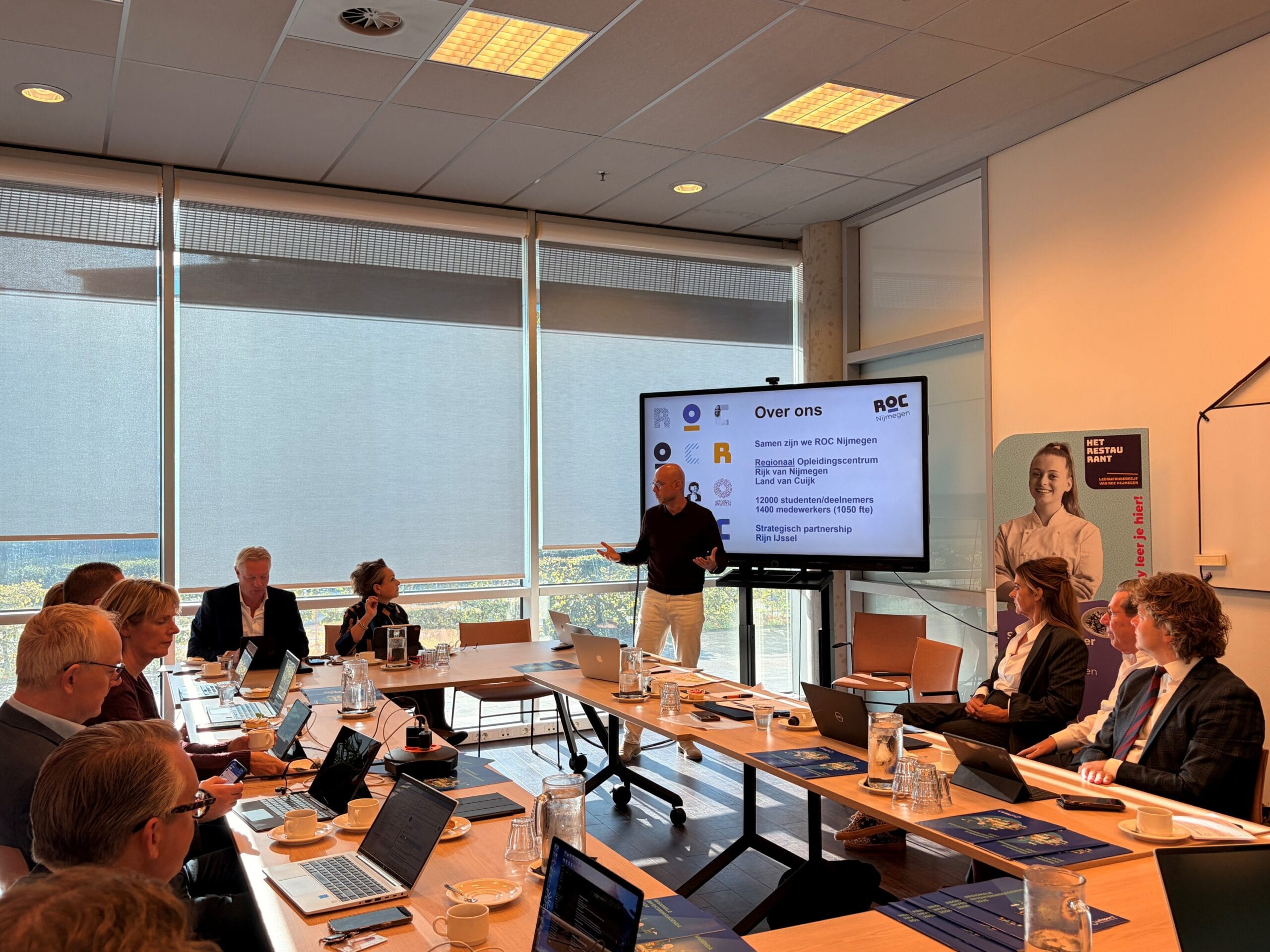
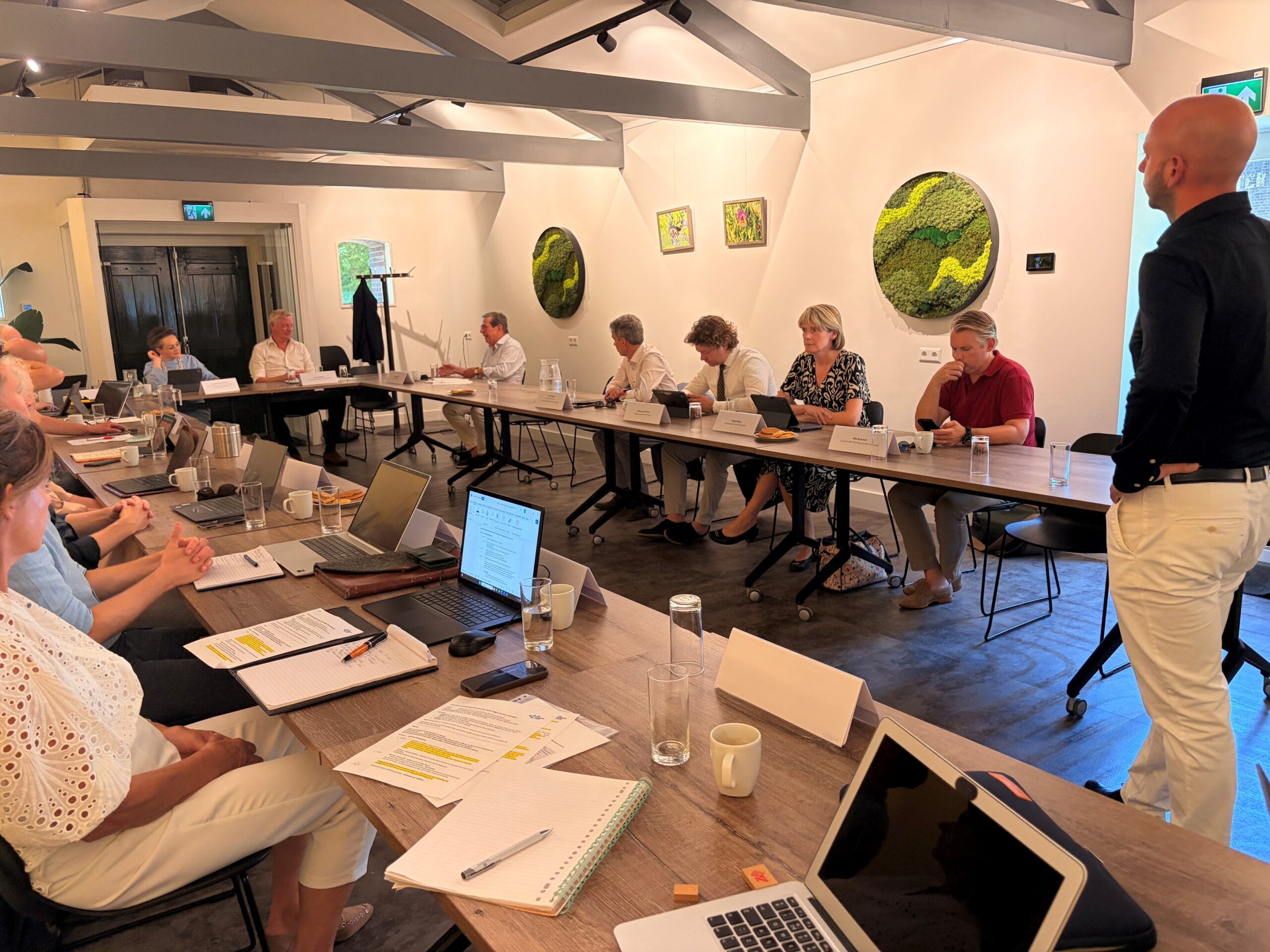
Board members meet at Fort bij Rijnauwen
A single, unified narrative for Lifeport
The Netherlands and Europe face major challenges. Grid congestion, staff shortages, the future of healthcare, the energy transition and the strengthening of strategic technologies all call for smart solutions. Regions, in particular, play a key role in this. The Lifeport region demonstrates how economic development and social challenges can reinforce one another.
Based on this conviction, The Economic Board Arnhem-Nijmegen Region and the Arnhem-Nijmegen Green Metropolitan Region are working towards the region’s future with a single shared ambition. Whilst The Economic Board focuses on economic development and the Green Metropolitan Region on spatial planning challenges, these ambitions converge into a single, integrated strategy.
Regional Investment Agenda as a guide
In the Regional Investment Agenda (RIA), public authorities, entrepreneurs and knowledge institutions pool their ambitions and investments. Under the leadership of both organisations, this results in a single, coherent agenda that guides the region’s development.
The RIA brings together public and private investment and links all the region’s key priorities: housing, accessibility, the economy, nature, culture, health and energy. Through joint decisions, we are building a future-proof region in which innovation, talent development and broad prosperity go hand in hand.
The Policy Lobby Agenda provides direction
To truly realise these ambitions, a strong joint lobbying effort is essential. That is why the Lifeport Administrative Lobby Agenda, together with the Regional Investment Agenda, forms a single strategic narrative aimed at The Hague, Brussels and other key partners.
Whilst the RIA sets out what the region aims to achieve and the investments required to do so, the Administrative Lobby Agenda outlines how the region intends to realise these ambitions through administrative channels. The agenda brings together the key priorities for advocacy and positioning and ensures that the region speaks with a single, recognisable voice.
Joint ownership
The Regional Investment Agenda and the Administrative Lobby Agenda are joint initiatives of the Arnhem-Nijmegen Green Metropolitan Region and The Economic Board of the Arnhem-Nijmegen Region.
The Economic Board oversees economic priorities, whilst the Green Metropolitan Region focuses on spatial planning challenges. Where the economy and spatial planning reinforce one another, both organisations work together. This creates a single, integrated approach to the development of the Lifeport region. Only together can we lead the way!