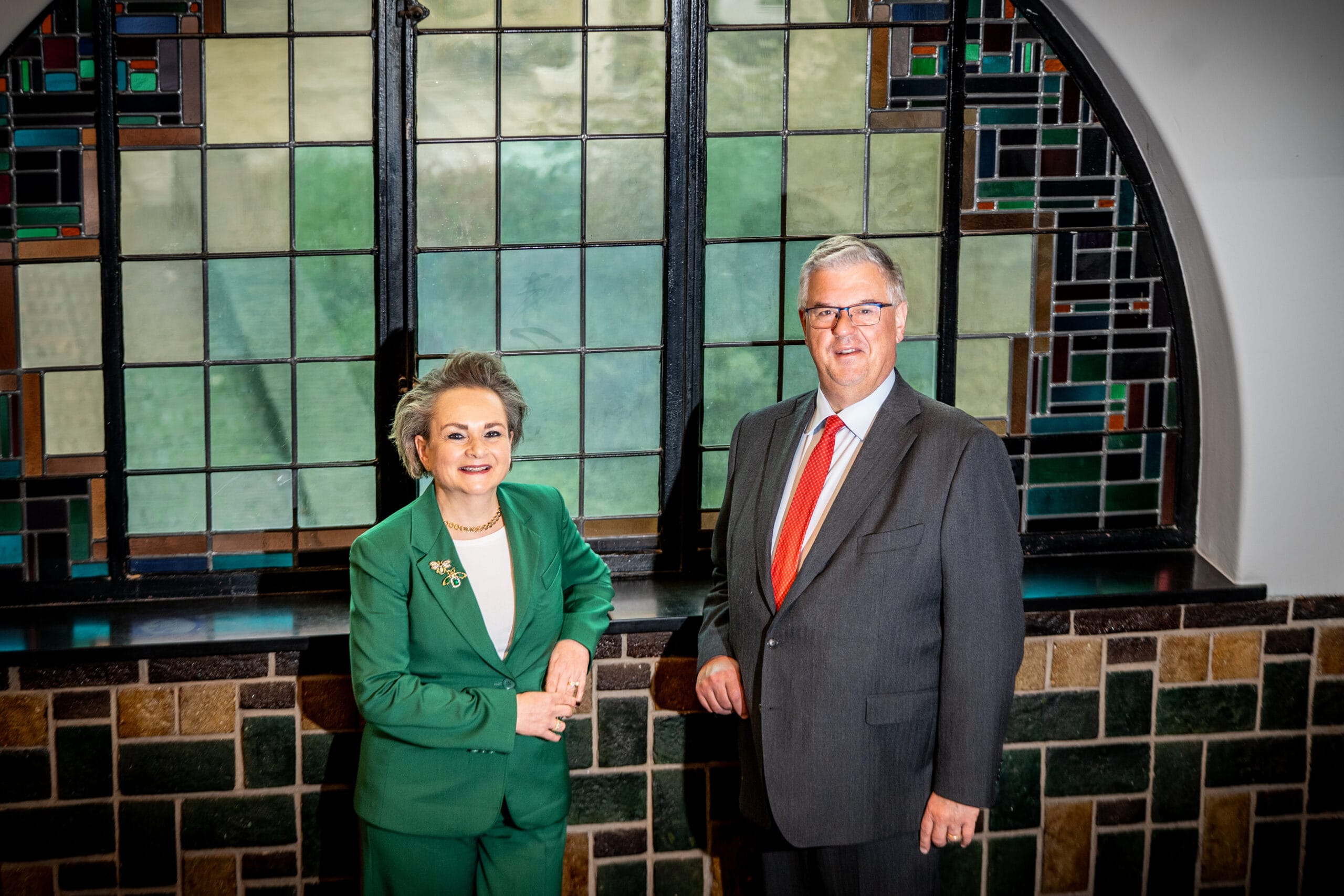
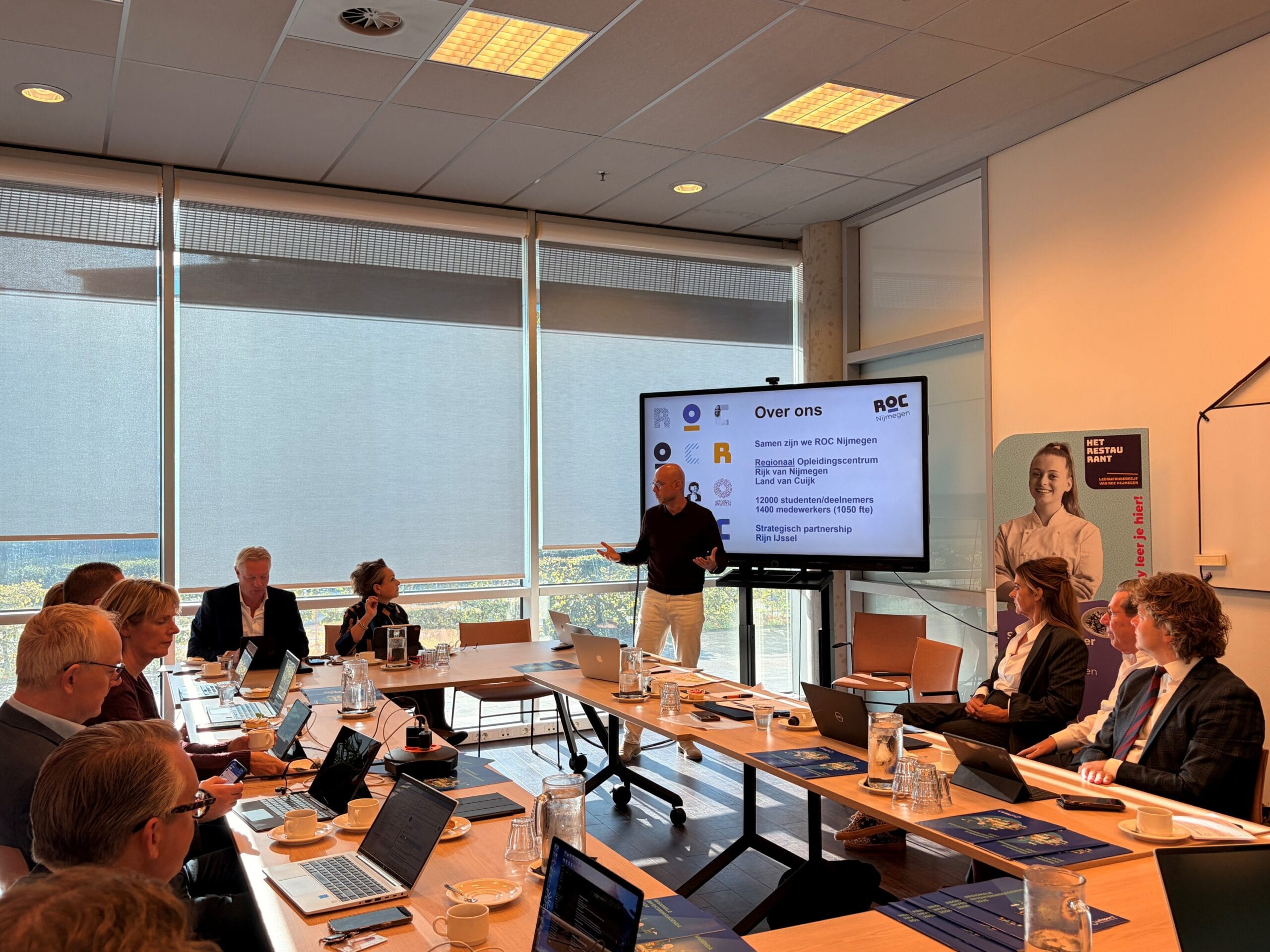
The board meeting on 17 March centred on a visit by members of The Economic Board to the High Tech Campus Eindhoven. Where are Brainport’s gems, what can we learn from them, and which aspects could we adopt for the Lifeport region? An inspiring session with Paul van Nunen, director of Brainport Eindhoven, and Jeroen Dijsselbloem, mayor of Eindhoven and chair of the Brainport Eindhoven Foundation, on the key priorities of Brainport Eindhoven.
The city of Eindhoven has changed; the region is growing and has now become highly internationally oriented. It has become commonplace to order a latte macchiato in English in Eindhoven city centre. That’s nice, but it also raises many concerns. And because the region is growing so rapidly, how can we in the public sector keep pace with private-sector growth? This applies to housing, amenities and also to the social fabric of our society. Will we actually manage to ensure that everyone benefits from the successes we are achieving here? And it is in this very broad field that Brainport is active. In Brainport Eindhoven, the triple helix – the collaboration between government, the business community and educational and knowledge institutions – jointly determines the strategy for maintaining and strengthening the regional innovation ecosystem.
History
At its peak in the 1970s, Philips employed about 440,000 people worldwide, 110,00 of them in the Netherlands. In the 1990s, Philips was in trouble, an economic crisis and Philips 'chose' a new strategy. So much unemployment, what are we going to do about it? The triple helix cooperation was then established in which it was stated to stay with the focus of the region.
Brainport works
The Brainport model works. Structurally, the Brainport economy is the largest growing economy in the Netherlands (even in corona time). Brainport is a broad job engine, European patent champion (around 4,000 per year) and proclaimed the smartest region, and the number of companies, R&D staff and students is still rising. But at the same time, this also gives growing pains. The living and settlement climate can barely keep up with the growth. Brainport needs 70,000 people in 2032, as many houses, facilities, etc. The tasks are too big for the region alone. Brainport's tasks for the future coincide with the agenda Brainport is developing with the national government. How can we discover new technologies, develop them and, above all, scale them up (knowing that risks in high-tech are high and lead times long). How does the Eindhoven region get enough technical talent? Brainport has made a plan with all educational institutions, primary schools, labour market regions and companies to turn all the knobs from labour participation to doubling TU. How do we ensure that the environment grows with us? Not only housing, is needed, but also infra, culture, sports, care et cetera.
Brainport success factors
What are the success factors? Linking knowledge-based industries to the manufacturing sector. The link with the manufacturing sector is crucial for employment and also for broader prosperity.
A focus on the high-tech manufacturing sector, public-private partnerships, trust and the importance of the region having its own distinct identity are the success factors cited for Brainport.
Visit to NXP
Following this, members of The Economic Board visited the international headquarters of NXP Semiconductors, the world’s largest chip manufacturer. There, Jean Schreurs and Maurice Geraets, members of NXP’s executive board, spoke about the research, development and production of the chips.
NXP’s international headquarters are based in Eindhoven, whilst its production facility is located in Nijmegen, on the Noviotech Campus. NXP supplies computer chips to all car manufacturers worldwide. An average car contains a thousand chips, and an electric car more than two thousand. Each chip consists of around 40 layers, and the production process takes almost eight months. Chips are needed to make cars function and mobile phones work, but they are also found in your bank card and in almost all electronic devices. Demand for chips is rising dramatically, as the need for them increases.