The members of The Economic Board Arnhem-Nijmegen Region together form a powerful triple helix: a collaboration between entrepreneurs, public authorities and knowledge institutions with a single shared goal – building a vibrant and sustainable region. Every two months, the Board meets at inspiring venues across the region. In June, the meeting took place at Huize Heijendaal, the country house situated on the grounds of Radboud University and Radboudumc.
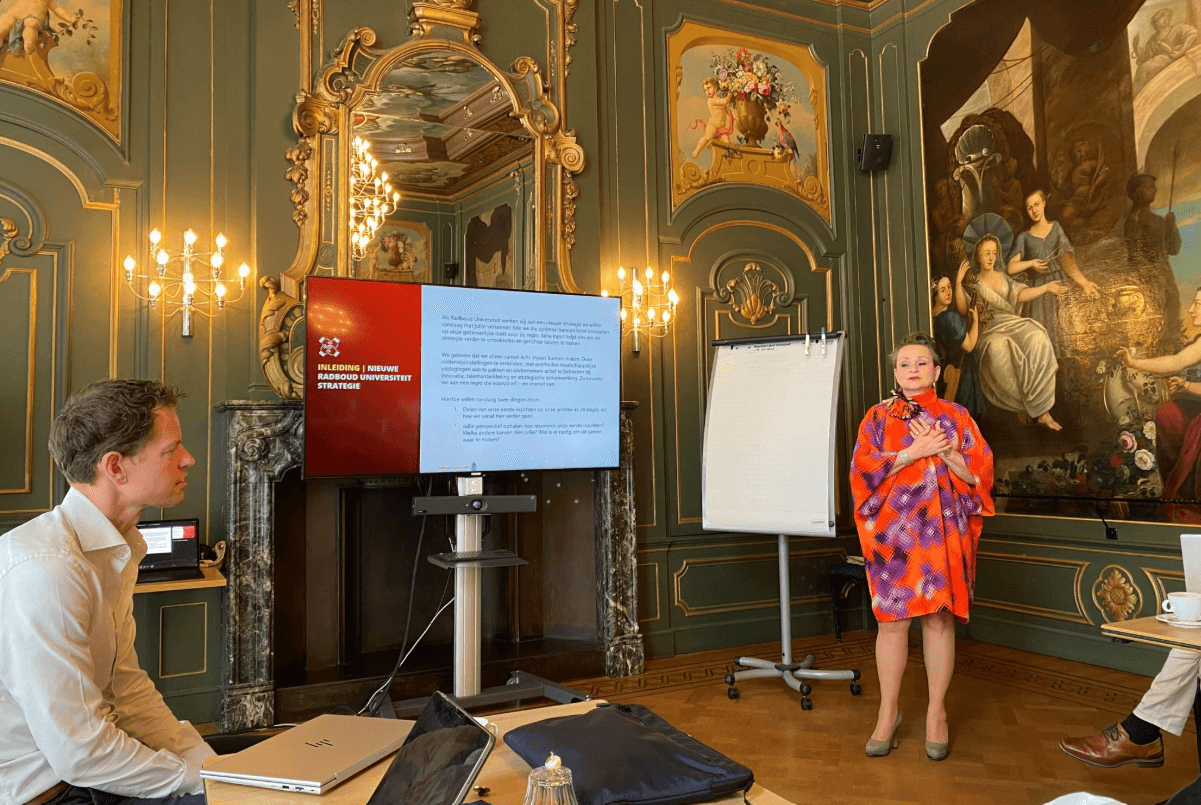
Alexandra van Huffelen, who has been Chair of the Executive Board of Radboud University since last February, welcomed the Board members to this beautiful venue. As a broad-based, international research university with over 25,000 students, Radboud University plays a central role in the region. Students here follow degree programmes in fields including the humanities, natural sciences, medicine, law and business administration. The university stands for personal attention, equal opportunities and a sustainable, just society – values that align seamlessly with the region’s social ambitions.
The agenda for the board meeting included, amongst other items, the development of Radboud University’s 2026–2031 strategy and the ‘Schaalsprong’ initiative for the region.
Radboud University: firmly rooted in the region with new strategy
In a world full of transitions and societal challenges, universities are under more pressure than ever. At the same time, unprecedented opportunities are emerging right now for institutions that dare to position themselves as drivers of innovation. With a new strategy – to be presented to the minister in early 2026 – Radboud University is making a clear commitment to connection: both with its social mission and with the region.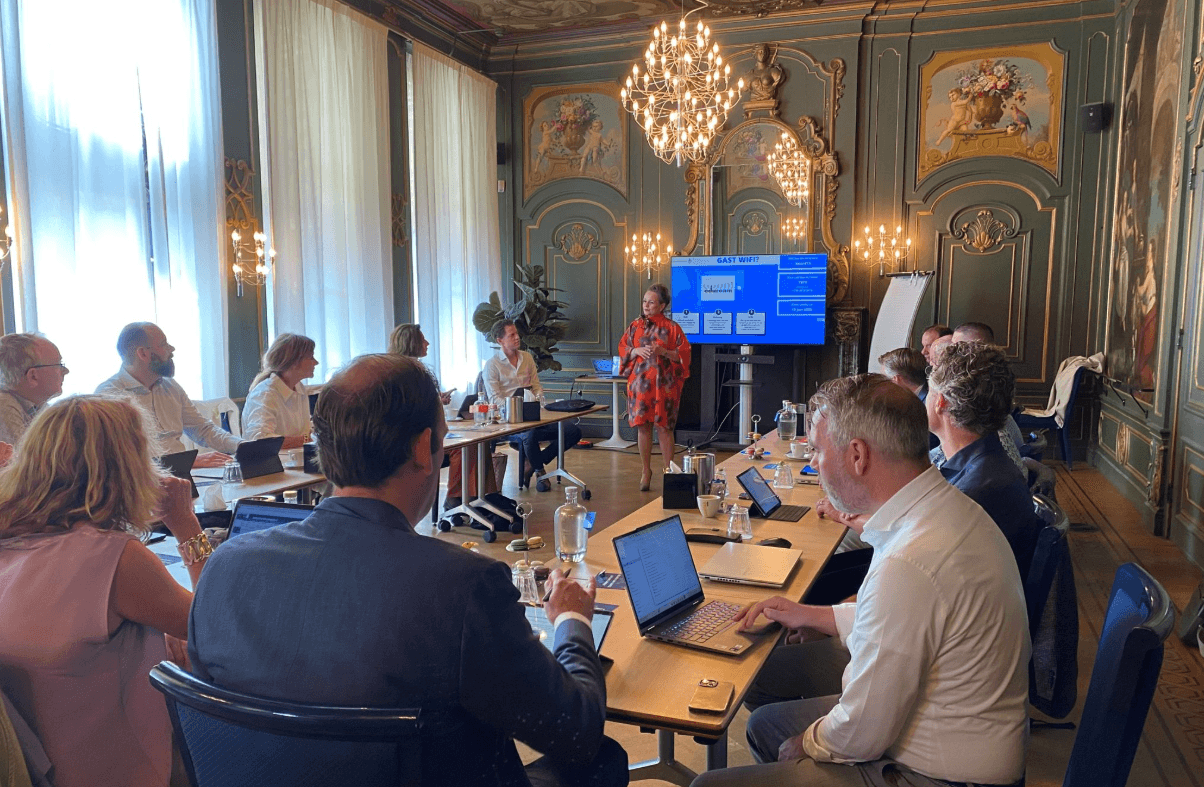
Catalyst of social innovation
"The university of the future is not an ivory tower, but an open network organisation," argues Arjan-Tim Ferweda, who took the Board members through the contours of the new course. Radboud University wants to profile itself more emphatically as a catalyst of social innovation, with a strong identity and clear strategic ambitions. These ambitions go beyond science alone: they are about connecting knowledge, talent and networks to the urgent challenges of our time. Lifeport Regio Arnhem Nijmegen is bursting with talent, innovative companies and social initiatives. But to really use that potential, cooperation is essential. Radboud University's new strategy provides a solid foundation for this. Researchers, students and partners from the region are explicitly invited to build solutions for the future together.
The Scale-Up: one plan for all tasks
‘De Schaalsprong’ is an integrated approach that brings together all regional challenges: from the economy and healthcare to housing and mobility. It connects sectors and levels of government and is committed to a strong, future-proof region. The focus is on strengthening the vital sectors of Energy and Semicon, with future-proof healthcare as a prerequisite. In addition, it centres on housing, accessibility and an attractive business climate.
Bram Sieben and Berry Roelofs outlined the urgency: a Regional Investment Agenda (RIA) in which challenges up to 2040 are tackled in a coherent manner. Not as separate projects, but as a single, joint strategy. Berry is investigating which investments will be needed between 2025 and 2035, where opportunities lie and where acceleration is required.
The ‘Schaalsprong’ is not just about doing more, but about doing better: a meaningful economy with scope for innovation, broad prosperity and social added value. Only by working together can we create a future-proof region – where everyone can grow, work and live.